Saturday, 21 July 2018

6 Most Ignored Causes Of Back Pain


Many people complain about back pain on a daily basis. They bend and twist, attempting to get a temporary relief, and most of the times they blame other things that they cannot control. However, very often, they probably know the real cause and ignore it thinking they are unable or are unwilling to fix it.

The truth is that no one should have to live with back pain every day. Many of the causes of back pain can be easily reversed. These simple fixes leave no excuse for people to complain about their back pain ever again, and can allow them to start living the life that they always wanted.
6 Most Ignored Causes Of Back Pain
Staying Still
Many people think that when they experience a back pain, they should stay in bed and let it heal. This may be true for some extreme cases of back pain from a physical trauma, but normal every day back pain might be better treated with some movements. According to orthopaedic in Delhi, those who are suffering from back pain should engage in some light activity, like flexing or stretching to make their muscles relax and keep the mobility in their spine.
Chronic Issues
There are a lot of people who have chronic back issues that they simply live with on a daily basis. The causes of this type of pain can vary, but many people suffer from things like herniated disks and spinal stenosis. Those who have chronic back pain should find out what spinal stenosis treatment is first and learn some methods for preventing the issue from returning. As per orthopaedic in South Delhi, this simple fix can help even those who have been suffering from severe back pain for years finally live a pain free life.
Fashion Accessories
Many women wear high heels on their feet and heavy bags on their shoulders daily. This may seem like a necessity to many women, but these fashion choices could be causing them back pain and other health issues. Orthopaedic in Dwarka suggest that every woman’s heels should be under 2 inches if she spends much of the day standing or walking and her handbag should be under 10 pounds at all times to prevent back issues from happening.
Desk-job
Most people, these days, spend their time in office sitting at the desk for 8 hours or more, and then sitting in a car to get home to sit on a couch eventually. All of this sitting can cause back pain and soreness that might seem unbearable to some. Not everyone can have a job that allows them not to sit at a desk all day, thus, orthopaedic in RK Puram says that those who do work at desks should try to get up at least once an hour to move around and stretch. This simple little break can help anyone reduce the amount of back pain they experience every day.
Weak Muscles
According to orthopaedic in Malviya Nagar, the core muscles, more specifically the abdominal muscles and back muscles that encase the spine, are essential for supporting the spine. If these muscles are weak, a person can experience a lot of back pain and soreness on a regular basis. Everyone should incorporate some core exercises into their regular fitness routine to see an improvement in their daily back pain.
Stress
It is a well-known fact that stress can adversely impact the health of an individual in numerous ways. It may seem silly to some, however, stress can actually cause people physical pain, as well, if left untreated says orthopaedic in Green Park. Many people hold tension in their back, so those who are very tensed or stressed out will often experience some form of back pain. Everyone should have some way to relieve stress every day, whether that is a 10 minute walk or an hour of meditation, each person will have something that will help them relieve stress and live better each and every day.

Sunday, 25 February 2018

Arthroscopy in Delhi For Knee Surgery

The utilization of arthroscopy has changed a wide range of kinds of orthopedic surgery in Delhi. Amid arthroscopy, a little camcorder connected to a fiberoptic focal point is embedded into the body to enable an orthopaedic in Delhi to see without making a substantial cut. The knee was the principal joint in which the arthroscope was regularly used to both analyze issues and to perform surgical systems inside the knee joint.

Knee arthroscopy in Dwarka, South Delhi, Delhi is a typical system and more than 100 000 arthroscopies are performed in India every year.

Arthroscopy in Delhi is helpful in assessing and treating the accompanying conditions
1.       Torn drifting ligament (meniscus): The ligament is trimmed to a steady edge or at times repaired
2.       Torn surface (articular) ligament
3.       Expulsion of free bodies (ligament or bone that has severed) and blisters.
4.       Recreation of the Anterior Cruciate tendon
5.       Patello-femoral (knee-top) issue
6.       Washout of tainted knees
7.       General demonstrative purposes

Knee arthroscopy is a sort of keyhole knee surgery that empowers an orthopaedic in South Delhi, Delhi, to see inside your knee with a camera. Your orthopaedic in Dwarka, Delhi may prescribe that you have knee arthroscopy in the event that you have industrious knee torment and different side effects. Knee arthroscopy in South Delhi may not enhance knee torment and solidness in individuals who as of now have osteoarthritis. In this way, it's not regularly prescribed to individuals with just osteoarthritis torment. In any case, you might be offered an arthroscopy on the off chance that you have osteoarthritis and your knee additionally gets or gives way. You may likewise be offered keyhole knee surgery if weight reduction and exercise haven't helped your osteoarthritis after no less than three months.

You can likewise have treatment amid knee arthroscopy. Your orthopaedic in Green Park may repair or expel any harmed tissue and ligament. Your orthopaedic in Saket can take little tissue tests (biopsies), which can analyze issues, for example, a disease. More unpredictable surgery can likewise now and again be performed through a knee arthroscopy. This can incorporate surgery to repair torn knee tendons, or to treat a flimsy kneecap.

Your orthopaedic in Janakpuri will utilize an arthroscope (a thin metal tube that contains a camera) and little surgical instruments amid your knee surgery. Pictures are appeared on a screen. Your orthopaedic in Uttam Nagar can use these pictures to demonstrate to you what's the issue with your knee after your arthroscopy in Delhi.

You ought to recoup more rapidly from knee arthroscopy than if you have open knee surgery.

Arthroscopy Procedure
Knee arthroscopy for the most part takes not as much as 60 minutes. Be that as it may, this relies upon how much work your orthopaedic in Hauz Khas needs to do inside your knee joint.

You'll be resting on a table with your leg in the correct position so your orthopaedic surgeon in Delhi can see your knee plainly. Your orthopaedic in RK Puram will sit tight for the analgesic to begin working. At that point they'll make little cuts in the skin around your knee. They'll put clean liquid into your knee joint to wash it out. This will enable them to see within your knee all the more plainly. They'll at that point embed the arthroscope (thin metal tube containing a camera) and inspect your knee joint by taking a gander at pictures on a screen.

Your orthopaedic in South Delhi will move the arthroscope around so they don't miss anything they have to take a gander at. They may take a few photos. Once they've analyzed the issue, they may choose to treat your knee. They may utilize other surgical devices to repair or evacuate any harmed tissue, for example, ligament.

Once they've completed the process of peered inside your knee, your orthopaedic in Dwarka will deplete the liquid out. At that point they'll close the cuts with lines or cement strips and wrap a dressing around your knee.


If a person’s knee pain issue can be resolved by arthroscopy, doctor opt it otherwise in maximum cases patient need to go for knee replacement in Delhi.

Tuesday, 20 February 2018

Facts You Should Know About Knee Replacement in Delhi

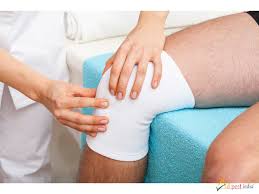
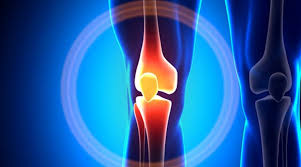
Procedure of Joint replacement in Delhi involves medical procedures to replace the ends of bones within a damaged joint. This kind of joint replacement surgery in Delhi creates fresh joint surfaces.
total-knee-replacement-surgery
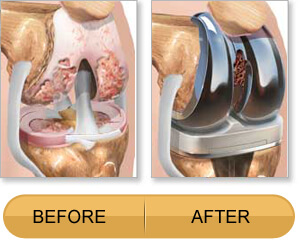
With knee replacement in Delhi, the ends from the damaged thigh and lower leg (shin) bone fragments and usually the cap are capped with artificial surfaces. These types of surfaces are layered with metal and plastic. In most cases, orthopaedic in Delhi replace the entire surface area at the ends in the thigh and leg bones. Doctors generally secure knee joint components to the bone tissues with cement.
Orthopaedic in South Delhi are working on methods to replace just the broken parts of the leg joint. This is occasionally called partial joint replacement. Non-compartmental alternative is one example of partial knee replacement. This replaces just the internal knee surfaces as well as outer knee areas, depending on where the harm is. Another just a few replacement is called your patellofemoral replacement. With this surgery, the end on the thigh bone is usually replaced, and a great artificial surface is utilized to line your back of the kneecap.
On knee replacement operation, orthopaedic in Dwarka remove the ruined cartilage and replace it with new joint surfaces in the process.
Joint adjustments caused by osteoarthritis could also stretch and harm the ligaments the fact that connect the upper leg bone to the leg bone. After surgical treatment, the artificial joint itself and the staying ligaments around the joint usually provide ample stability so that the destroyed ligaments are not problems.
Your orthopaedic in Janakpuri may use basic anesthesia. This means you’ll certainly be asleep during the surgical procedure. But sometimes health professionals use regional inconsiderateness. This means you can’t find out the area of the surgery. You are going to feel sleepy, however, you will be awake. Which kind of anesthesia you get depends on your physician and on your overall health. Your physician might also ask whatever you prefer.
Your orthopaedic in Uttam Nagar might recommend that you consider antibiotics before and after the surgery to reduce the chance of infection. If you need any kind of major dental work, your medical professional may recommend that you could have it done prior to the surgery. Infections may spread from other areas of the body, such as the mouth, towards the artificial joint and cause a serious problem.
What you should expect After Surgery
Immediately after surgery
You will have 4 antibiotics for approximately a day after surgical procedures. You will also receive medications to control pain, and maybe medicines to prevent bloodstream clots. It is not uncommon to have an upset belly or feel constipated after surgery. Talk to your orthopaedic in RK Puram or health professional if you don’t feel very well.
When you wake up coming from surgery, you will have a plaster on your knee. You will likely have a drain to collect fluid and maintain it from accumulating around your joint. You may have a catheter. This is a small pipe connected to your bladder so you don’t have to get free from bed to pee. You may also have a good compression pump or perhaps compression stocking in your leg. This device pushes your leg. That keeps the blood moving and helps prevent body clots.
Your orthopaedic in Malviya Nagar may possibly teach you to do basic breathing exercises to assist prevent congestion within your lungs while your company’s activity level is definitely reduced. You may also learn how to move your feet up and down to bend your muscles and keep your body’s blood circulating.
The initial few days
You will probably nonetheless take some medication. Over time, you will have less and less pain remedies. You may keep acquiring medicines to prevent blood vessels clots for at least 15 days after medical procedures.
Most people who have knee replacement in Delhi begin to walk with a master or crutches your day of surgery or maybe the next day. And most persons can bear excess weight on the knee when it is comfortable.
A physiotherapist will help you gently flex and straighten your knee. Your orthopaedic in Green Park will also begin a few simple exercises to aid strengthen your leg muscles.
Treatment (rehab) after a leg replacement is rigorous. The main goal of rehab is to enable you to bend your kneecap at least 80 degrees. That much flex is enough for you to do day to day activities, such as walk, rise stairs, sit with and get up via chairs, and enter and out of the car. Most people can easily bend the leg more than 90 levels after surgery. However one of the things that impacts how much bend you get after medical procedures is how much curve you had before surgery treatment. To get the most take advantage of your surgery, it is crucial that you take part in therapy. You will get this remedy both while you are inside the hospital and after you decide to go home.
Most people return home within a few days into a week after operation. Some people who need much more extensive rehab or maybe those who don’t have somebody who can help at home visit a specialized rehab center for more treatment.
Continuing recovery
After you go back home, watch the surgical treatment site and your health and wellness. If you notice any inflammation or drainage from the wound, tell your orthopaedic in Saket. You may also be recommended to take your temperatures twice each day and also to let your surgeon understand if you have a fever over 38°C (100. 4°F).
Rehab proceeds after you go home through the hospital. You will get rehabilitation until you are able to function on your own and you return as much strength and range of motion in your knees as you can. You will maintain working on increasing the total amount you can bend your company’s knee and on setting up strength and stamina. Total rehab following surgery will take a few months.
You will have an exercise system to follow when you go house, even if you are still having physiotherapy. You should also have a short walk many times each day. If you notice virtually any soreness, try a chilly pack on your kneecap. You might also cut back on your activity a bit. Yet don’t stop totally. Staying on your going for walks and exercise program can help you recover faster.
Your orthopaedic in Delhi may recommend that you ride a fixed bike. It can help enhance your leg muscles and make your knee bending. Going swimming is also a good workout after knee surgical procedure. But don’t will end up in the water until your stitches are removed.
Coping with a knee alternative
Your best knee surgeon in Delhi may want to help you from time to time for several a few months or more to monitor your body’s knee replacement in South Delhi. With time, you will be able to do the majority of the things you could perform before surgery.
Determining your weight will help your brand-new knee joint keep going longer.
Stay active to keep your strength, versatility, and endurance. Your body’s activities might consist of walking, swimming (after your wound is totally healed), dancing, as well as golf. (If you golf, don’t put on shoes with surges. And make sure to use a golfing cart.) You can also try cycling on the stationary bike or simply on level floors.
For at least 2 years soon after your surgery, your orthopaedic in South Delhi may want you to take on antibiotics before oral alignment or any invasive surgical procedure. This is to help stop infection around your knee replacement. Following 2 years, your doctor and dentist will determine whether you still require antibiotics. Your general health insurance and the state of your additional health conditions will help all of them decide.
Why It really is Done
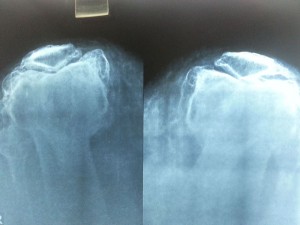
Orthopaedic surgeon in Delhi suggest joint replacement surgery in South Delhi when knee discomfort and loss of function become severe so when medicines and other remedies no longer relieve soreness. Orthopaedic surgeon in South Delhi will use X-rays to look at the bone and cartilage inside your knee to see if they may be damaged. This helps the physician make sure that the ache isn’t coming from elsewhere.
Doctors may not advise knee replacement for individuals who:
  • Have poor overall health and may not endure anesthesia and medical procedures well.
  • Have an energetic infection or are in danger for infection.
  • Possess osteoporosis (significant loss of the bones).
  • Have got severe weakness with the quadriceps muscles in front of the thigh.
Get a knee the fact that appears to bend backwards when the knee can be fully extended (genu recurvatum), if this problem is due to muscle a weakness or paralysis.
Will be severely overweight. Alternative joints may be very likely to fail in people who also are very overweight.
A few doctors will propose other types of surgery if at all possible for younger persons and especially for those who carry out strenuous work. Your younger or more productive person is more likely than an older or much less active person to have artificial knee joint wear out. People who are extremely overweight are also very likely to have an artificial leg joint wear out from your extra stress within the joint.
Doctors commonly don’t recommend knees replacement surgery for those who have very high anticipations for how much they’ll be able to do with all the artificial joint. (Examples are people who be prepared to be able to run, skiing, or do alternative activities that stress the knee joint. ) The artificial kneecap allows a person to perform ordinary daily activities with less pain. Will not restore the same degree of function that the man had before the harm to the knee joint began.
How Very well It Works
Most people possess much less pain immediately after knee replacement in Dwarka and are able to accomplish many of their activities more easily.
The leg will not bend as much as it did prior to you developed knee complications. But the surgery will help you to stand and walk for longer intervals without pain.
After operation, you may be allowed to continue activities such as golf, riding a bike, swimming, strolling for exercise, dance, or cross-country snowboarding (if you do these activities prior to surgery).
Your doctor may well discourage you by running, playing rugby, squatting, and performing other things that place a lot of stress around the joint.
The younger that you are when you have the surgical treatment and the more tension you put on the joint, the more likely it is you will later need a second surgery to replace the first artificial joint. Over time, the components wear out or may release and need to be changed.
Your artificial joint should last longer if not overweight and you usually do not do hard physical work or perform sports that anxiety the joint. In case you are older than 60 if you have surgical procedure, of joint replacement in Delhi, the artificial joint will probably last the remainder of your life.
People who have some partial knee alternative may have less problems. But in one study these were not as satisfied because people who had a complete knee replacement.
If you wait around to have surgery till you have already dropped a lot of your power, flexibility, balance, strength, and ability to become active, then just after surgery you might have your harder time for your normal actions.
Risks
Risks out of knee replacement surgical procedures include:
Blood clots. People may get a good blood clot within a leg vein once knee joint substitute surgery. Blood clots can be dangerous in the event that they block blood circulation from the leg returning to the heart and also move to the lung area. Blood clots happen more often in seniors, people who are very obese, people who have had blood stream clots before, and those that have cancer.
Contamination in the surgical injury or in the joint. Infection is uncommon in people who will be otherwise healthy. Many people are at higher risk of infection after any sort of surgery. This includes individuals who have other health problems, including diabetes, rheumatoid arthritis, or perhaps chronic liver disease, and those who take corticosteroids. Many wound infections are actually treated with anti-biotics. Infections deep from the joint may need much more surgery. And in some cases a doctor must remove the unnatural joint.
Nerve damage. In rare cases, some nerve may be hurt around the site of your surgery. It is more prevalent (but still unusual) if the surgeon is additionally correcting problems inside joint. A neural injury may cause tingling, numbness, or problems moving a muscle mass. These injuries often get better over time and perhaps may go away entirely.
Problems with wound recovery. Wound healing trouble is more common in people who also take corticosteroids or maybe who have diseases the fact that affect the immune system, just like rheumatoid arthritis and diabetes.
Lack of good mobility. How much you can fold your knee following surgery depends a whole lot on how much you might bend your knees before surgery. Some individuals are not able to bend their particular knee far plenty of to allow them to do their very own regular daily activities, actually after several weeks of recovery. If this happens, your physician may give you your medicine to relax the muscles and then gently pressure your knee to bend further. This might loosen tissues throughout the joint that are stopping you from twisting it.
Dislocation belonging to the kneecap (patella). This really is an uncommon problem of knee replacing surgery. If this happens, the kneecap may proceed to one side within the knee, and it will “pop” back when you bend over your knee. It’s not always painful, but it could make the knee experience unstable, and it might be uncomfortable. Dislocation from the kneecap interferes with the way in which your thigh muscle tissue (quadriceps) work, and it usually must be treated with medical procedures. In some cases, the kneecap replacement surgery should be completely redone in the event the dislocation is the effect of a problem with the way the elements in the knee get in line.
Fracture of the cap (patella). The cap could fracture possibly because of a fall as well as while you are using the leg normally. This problem is very uncommon. It might be seen in people who can certainly bend the knees almost normally and may easily climb stairways and get up right from chairs. Doctors in most cases can treat a good fractured kneecap with no surgery.
Instability during the joint. The kneecap may be unstable or simply wobbly if the substitution components are not correctly aligned. You may need a second surgery to align the constituents correctly so that your leg is stable.
The typical risks of standard anesthesia. Risks of any surgery happen to be higher in people that have had a recent myocardial infarction and those who have long lasting (chronic) lung, liver organ, kidney, or heart problems.
What To Think About
Workout (swimming, walking) is very important to your general wellbeing and muscle energy. Talk with your doctor which kind of exercise is best for you.
Occasionally you may donate your company’s own blood to work with during surgery in the event needed. This is known as autologous blood gift. If you choose to do this, begin the donation a few weeks before the surgery. You should have more time to contribute enough blood and rebuild your circulation volume before surgery treatment.
If you need more than one surgery for joint replacement in Dwarka, which include both knees or possibly a knee and some hip, talk to your health care provider about guidelines that will help you and your doctor make a decision in which order to the actual surgeries

Monday, 22 January 2018

Total Knee Replacement For Proper Mobility of Your Leg

Today, knee replacement is one of the most widely performed joint replacement surgery in Delhi, South Delhi by orthopaedic in Delhi, South Delhi, Dwarka, Janakpuri, Uttam Nagar, RK Puram, Malviya Nagar, Green Park, Saket. Total knee replacement, also called Total Knee Arthroplasty, involves eliminating the diseased bone tissue and cartilage and resurfacing it with orthopedic implants.
knee-replacement-surgery-2
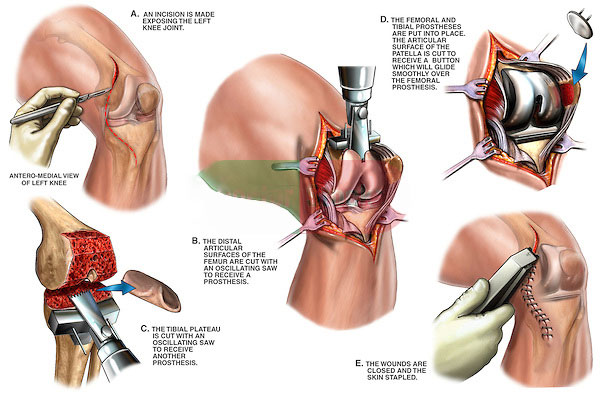
The term “replacement” gives the impression that your surgeon is usually removing the entire knees. However, your doctor will only resurface the damaged bone and cartilage of your joint. During surgery for joint replacement in Delhi, South Delhi & Dwarka, the joint is uncovered by an incision, made down the middle or off aside of the knee. The damaged bone ends are then resurfaced with components made to re-create the organic contours of the bone fragments in a healthy kneecap. The metal and polyethylene (plastic) improvements allow the bones to smoothly glide next to each other, like your normal cartilage.
Total knee replacement in South Delhi is performed when you are under anesthesia. There are numerous types of inconsiderateness available and your best knee surgeon in Delhi will explain the choices before your medical procedures.
The length of surgery can vary from approximately 1 to 2 hours. Care prior to surgery and period spent in the restoration room can add an extra one or two hours towards the procedure.
The Male or female Issue
Differences in Shape and size
Design teams look at the obvious anatomical variations between narrow, smaller—typically female—knees and larger, larger knee sizes typically seen in males. This is a fact that some other knee designs are just right now addressing.
Several manufactures feature a broad variety of specific shapes and sizes to satisfy the anatomic requirements of individual sufferers, whether male or female. In addition, unlike newer knees systems, the correct decision offers the confidence you are able to only get from superb, longstanding clinical outcomes.
Differences in Patellar Monitoring
When bending a knee, the kneecap naturally “floats”, moving slightly to both the inside and also the outside of the kneecap. Studies have shown the fact that average person’s cap moves slightly for the inside as the knee is prolonged.
Because women generally have wider hips, their particular muscles and structures may cause their kneecaps to track at a rather different angle than men’s. One producer has attempted to address this difference through designing a “female” implant that guides the kneecap to the outside in a specific angle, whatever the individual patient’s exclusive anatomy, soft cells or muscle framework. Unnatural patellar monitoring can put tension on muscles and ligaments and trigger post-operative pain.
In comparison, the specially designed knee replacements, having a wide femoral groove, allows the patient’s cap to track naturally (to either the inside as well as outside) during regular bending and styling of the leg.
Conserving Your Bone Whilst Providing For Versatility
The surgical procedure of knee replacement in Delhi, Dwarka needs that a small amount of bone fragments be removed to put the implant it is in place. Several implants and surgical instrumentation are designed with bone storage in mind.
To achieve the maximum degrees of flexion, a few of the new “female” augmentations require that more of your, healthy bone become removed to accommodate your thicker, bulkier implant. Streamlined design can perform high flexion whilst preserving as much of your company’s natural bone as is possible.
The Right Choice for You
Your best knee surgeon in South Delhi will think about a wide variety of variables when ever selecting the knee implant that’s best for you. Your age, height, excess weight, lifestyle and your health and wellness are among the most key elements. There are total knees system that are designed to support these and other variants in anatomy to supply you the best possible end result.

Wednesday, 25 October 2017

Things to do After Joint Replacement Surgery in Delhi

After undergoing the joint replacement surgery in Delhi, regular exercising plays a major role in restoring the joint strength and mobility for a gradual return to everyday activities. The best orthopedic surgeon in Delhi suggests performing simple exercises, in direction of the best physical therapist, for at least 20 to 30 minutes thrice a day. Apart from regular mild exercises, you have to make certain changes in your lifestyle habit after the joint replacement surgery.

22-300x225

Wound care – after getting the discharge from the hospital, follow the recommendations to recover soon and prevent infection around the surgical wound:
  • Keep the area around wounds clean and dry. Visit the doctor for regular dressing of the wound and ask for necessary instruction before and after the dressing.
  • Obey the doctor’s instructions and wait to take a shower until the doctor shows a green signal for it.
  • Consult the doctor immediately if the wound drains or the area around it appears red because this could be an indication of some infection.
Swelling – The best joint replacement doctor states that from mild to moderate swelling for the first 3 to 6 months is normal after the joint replacement surgery in Delhi. However, apply some ice on the surgical area to lessen the swelling.

Medication – Don’t skip the medicines prescribed by the doctor as they will support for a quicker recovery and will eliminate the pain. Home medications may include non-narcotic and narcotic pain pills, stool softeners, oral or injectable blood thinners, and anti-nausea medications. Talk with the doctor about the cause and effect of each prescribed medicine, including even over-the-counter drugs, supplements, and vitamins. It is essentially important to prevent any sort of bacterial infection from developing as it will only complicate the artificial joint.

Diet – By the time you go home right after the joint replacement surgery in Delhi, make sure that you are following a healthy diet chart. Avoid the supplements and foods rich in Vitamin K including cauliflower, Brussel sprouts, broccoli, lentils, etc. Also, drink adequate water to keep the body hydrated.

Monday, 23 October 2017

Importance of Rehabilitation Surgery after Knee Replacement in Delhi

Have you wondered why your orthopedic surgeon refers the patient to the physiotherapist after the knee replacement in Delhi? This is because a regular physical activity is crucial to recovering soon after the surgery. The sole purpose of the regular exercise regime is to strengthen the muscles around the new joint to enable the active movements of the joint all once again.

download

Benefits of physical exercise after the knee replacement surgery in Delhi include:
  • Restoring normal movements in the artificial joint
  • Strengthening the joint and its surrounding muscles supporting for the joint movement
  • Lowering pain and stiffness in the joint
  • Getting back to routine physical activities
  • Improving blood circulation right after the surgery to prevent the condition like blood clotting
Here are the reasons why Knee Surgeon Delhi refers their patient to the physiotherapy specialist:
  • Promote healing – this is the most common reason why orthopedic doctors refer their patients for the physical therapy after the knee replacement in Delhi. Physiotherapy is advised to minimize the scar tissue and to retain the muscles after the surgery. However, don’t expect the recommendation from the knee surgeon Delhi because they are specialized only to diagnose and treat the knee injury, while physical therapist are specialized in dealing with the musculoskeletal system; thus, they are experts to help improving the join movability.
  • Regain mobility – Surgeries on the lower margins in particular (say the knees and hips) require physical therapy to redeem mobility. This could be attaining back to everyday activities like walking and sitting, or persisting to more vigorous exercise, like participating in a race.
  • Quicker recovery – Performing necessary rehabilitation exercise will help the body of the patient to recover soon from the surgical wounds. In case of knee replacement in Delhi, moving into the therapy room right after the surgery can lead to shorter stay in a hospital and better recovery.
Hence, the significance of rehabilitation therapies cannot be avoided in order if a patient wants to recover soon after the knee replacement in Delhi and resume to their routine activities.

Friday, 13 October 2017

Importance of Exercising Explained by the Best Orthopedic in Delhi

Why is the news getting common these days that people are undergoing Joint Replacement Surgery in Delhi and that too at a young age? According to an Orthopedic Doctor in Delhi, surely arthritis is the most common cause of joint replacement, but, these days, certain other factors are also contributing to the condition including lack of exercise, poor eating habits, and imbalanced lifestyle. And unfortunately, the most common among these is the lack of exercise. Exercise is critical for strengthening muscles and bones. The strength of muscles falloff as people grow older, but studies show that a person who skips exercising regularly is more disposed to weak bones and muscles rather than a person who exercises regularly. Orthopedic Surgeon in Delhi states that exercise lowers the risk of joint replacement surgery, and sadly, regardless of knowing the fact, people still skip their workout sessions.

images.jpg 
Pros of daily workout despite the age and gender are many; here is a short overview of the benefits.
  • Strengthening workouts construct muscle strength. Exercising is reasonably a first step to strengthen leg muscles even before in taking pain relievers. Healthcare professionals are concerned that overuse of painkiller drugs can actually damage the bone tissues of the patients leading to a more severe condition. Thus, if a person has not yet observed any symptom of osteoarthritis then they can begin their workout with strengthening the thigh muscles.
  • Certain motion exercises focus and improve the movement of a joint and muscle. Such as tai chi and yoga, emphasizing on flexibility, balance, and proper breathing.
  • Low-impact aerobic workouts support for stabilizing the muscles and bones and thus, prevent the risk of joint replacement surgery in Delhi. Therefore, orthopedic surgeons suggest cycling, swimming, and walking are good measures to keep bones healthy. On the other hand, patients with arthritis are advised to avoid high-impact activities such as playing tennis, racquetball, jogging, etc.
  • Some orthopedic doctors Delhi are also stressing on power exercise training that will emphasize on improving the muscle’s flexibility to respond quickly against resisting forces like climbing the stairs and sitting for long hours.

Wednesday, 11 October 2017

What Actually Contributes to Hip Replacement Surgery in South Delhi

The medical field of orthopedic is gaining recognition all over the country. Basically, the medical field involves diagnosing the pain, stiffness, and/or disorders of the bones and muscles of the human body. The human skeletal system consists of several bone and muscle joints including knee, fingers, ankle, elbow, wrist, and hip. Hip joint is the largest joint in the human body that is made of a ball and socket: the ball is the femoral head, whereas, the socket is the acetabulum. The movements of the hip joint are based on the articulation of the pelvis muscle with the femur that joins the axial skeleton with the lower extremity. However, if a person experiences pain and stiffness in the hip muscles movement, then it is advised to consult the best orthopedic surgeon in Delhi as soon as possible. The orthopedic doctors are trained to analyze and diagnose the joints condition and even after certain prescribed drugs and exercises, the pain is not relieved, then the doctors recommend undergoing a hip replacement surgery in South Delhi where the damaged or discomforting part of the hip joint is removed through a surgical process and the new artificial part is replaced.

images

How do the hip joints work?

The hip joint is enclosed by a tough and fibrous sleeve known as the capsule. This capsule supports to hold the bones together. This is lined by the synovium that produces a synovial fluid for lubricating the cartilage and the joints. As the hip joint is combined with several muscles that support the hip movement like walking and sitting, any damage in any of the part or muscle can make a person a candidate for the hip replacement surgery in South Delhi.

What causes hip pain and stiffness?

The joint pain is typically caused due to extra strain or inflamed soft tissues like tendons, whereas, several health conditions can contribute to long-term joint pain. Hip joint pain can be felt in the groin, knee, or down the front of the leg that might obstruct the movements.

Wednesday, 27 September 2017

Factors to be Considered before Hip Replacement Surgery

Osteoarthritis (OA) is, basically, the outcome of a variety of disorders that triggers structural or functional failure of the bone joints. The hip joint is the largest bone joint which is also known as ball and socket joint.

22-300x225

The bones of the hip joint are connected with each other with bands of tissue known as ligaments that are lubricated with the fluid to lower friction. Joints are also enclosed by a cartilage tissue that cushions the joints and prevents them from rubbing beside each other. A person is recommended for the hip replacement surgery if he/she is unable to perform routine activities such as standing, walking, sitting, bending, stretching, and running. However, there are several factors that are examined before the hip replacement surgery in South Delhi including age, gender, weight, and movability.

Gender – Women are at high risk of the joint pain and stiffness because they need more calcium than men as they go through several life changing phases including menstruation cycle, pregnancy, and menopause. Therefore, they soon lose the amount of calcium required for bone health which triggers the joint pain and stiffness and inability to perform certain movements.

Age – Typically people above the age of 50 are said to be the prone candidates, though the surgery can be performed to the young patients as well depending on the medical condition of the patient. The orthopedic surgeon in Delhi first recommends certain medications and treatment, and if nothing seems to be affecting, then they suggest for the hip replacement surgery.

Weight – Obese people having higher body mass index (BMI) have a higher risk of joint failure. A person having extra body weight gives more strain on the bones and muscles to perform the movements which then lead to developing osteoarthritis.

Movability – Long hours sitting job and performing strenuous exercises can put a lot of strain on the hip joints that prompts risk of osteoarthritis. The excess strain on the joints can damage or injure the cartilage and ligaments of the hip joints.

Monday, 18 September 2017

How Lifestyle Factors Lead to Arthritis?

It’s getting common that people at very young age are undergoing knee replacement in Delhi. The Orthopedic Surgeons clarifies that though the major cause of knee joint pain and stiffness is arthritis, several lifestyle changes also lead to joint pain and stiffness.

download

We all must have observed that with the technological advancements, the lifestyle of every person has changed to an extent. These lifestyle habits affect the health of a person in a very broad way and thus, stops them to actively perform their routine activities.

Sitting jobs – for meeting the everyday needs, it’s important to earn a living. The earning methods have been changed over the years. Earlier, the living was earned by doing farming or making crafts at home, but, today, people are engaged in the employment sector where they have to sit for long hours at one place only. Sitting in the same position for long hours can cause knee stiffness and numbness. Orthopedic surgeons in Delhi suggest that a person should move from their places and practice some general exercises like stretching the legs.

Walking and jogging – As everyone is having their personal vehicle, they just skip going for a walk or jog. This is also one of the major reasons for the knee replacement in Delhi because even if a person has to travel a 100 meter distance, he/she will use their vehicle instead of choosing an option to walk a little distance. According to an Orthopedic, a person should walk at least half an hour in a day and it’s a bitter truth that more than half of generation lacks this as well. They use escalators or elevators even for reaching the first floor of a building.

Unhealthy diet – To maintain a good bone health, it is essential that a person intakes sufficient amount of calcium and vitamins and follow a healthy diet plan. Research suggests that taking the required amount of Vitamins and calcium reduces the possibilities of arthritis. Also, following a healthy diet will prevent a person from obesity, which is also a major cause of arthritis.

10 Common Orthopedic Problems and Their Warning Signs

Our bones, joints, muscles, and ligaments support almost everything we do, from walking and climbing stairs to exercising and simply getting...