Showing posts with label hip replacement surgery in west delhi. Show all posts

Wednesday, 17 February 2021

Total Hip Arthroplasty: Indications, Types of Prostheses and Risks


Known as ” total hip arthroplasty ”, this replacement surgery is an option for the patient whose hip pain interferes with your daily activities and the simplest treatments do not improve. Arthritis, and the damage it causes, is the most common reason why patients seek a hip replacement in Delhi.

Generally this surgery is performed for different disorders that damage the joints located in the hip, so a replacement is sought, says the orthopaedic in Delhi.

  • Osteoarthritis that is generated by wear and tear and damages the slippery cartilage that covers the ends of the bones and that also helps the joints have smooth mobility.
  • Rheumatoid arthritis occurs as a consequence of an overactive immune system. This produces an inflammation that usually erodes the cartilage and sometimes the bone that is underneath, which causes damage to the joints.
  • In Osteonecrosis, if there is any irregularity in the blood supply to the spherical part of the hip joint, the bone may lose its shape and collapse.

This option for hip replacement in Delhi may be considered if you have pain with these aspects.

If it worsens when walking, even if you have a cane, if it interferes with your sleep, with your ability to go up and down stairs, and if it is difficult to get up when you are sitting.

The two main indications for a total hip replacement are pain and functional disability suffered by the patient. After the hip replacement in Delhi, not only does the pain disappear, but the patient can regain normal mobility of the affected hip and return to performing their daily activities in a satisfactory way.

Currently, both young patients and elderly patients who have osteoarthritis or some other degenerative disease of the hip (necrosis or fracture of the femoral head, hip dysplasia…) benefit from this hip replacement surgery in west Delhi, recovering both quality of life, such as the hope of being able to perform demanding physical activities (swimming, cycling, …), explains the orthopaedic in Delhi.

What is hip replacement surgery and what types of prostheses are there?

The hip replacement surgery in Delhi consists of the replacement of the affected joint by a mechanical implant, the prosthesis.

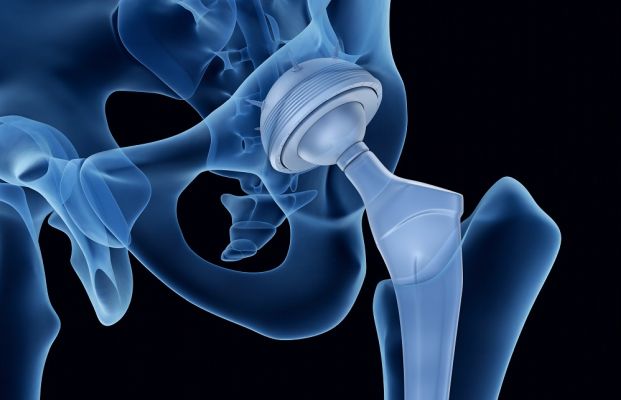
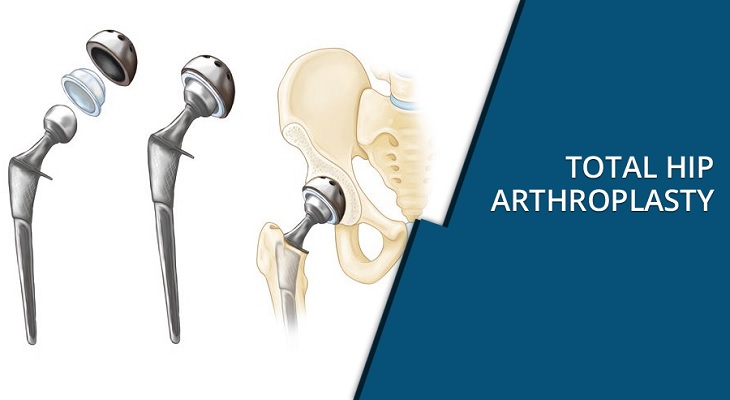
There are many types of prostheses, but in a generic way we can say that a total hip prosthesis consists of three basic elements; an implant for the femur part (stem), an implant for the pelvic or acetabulum part (cup), and an implant between the stem and cup (head).

Both the stem and the cup are fixed to the bone, and this fixation will be responsible for a hip replacement lasting more or less time. Depending on the fixation of the stem or cup to the bone, prostheses are classified as cemented or non-cemented.

Another important part of the prosthesis is the friction torque (components that are in contact during movement), which is classified according to the material: metal-polyethylene, ceramic-polyethylene, ceramic-ceramic, oxynium-polyethylene, metal-metal. Currently, the most widely used total hip prosthesis, according to the orthopaedic surgeon in Delhi, is the uncemented one with a metal-polyethylene friction pair.

The choice of the type of prosthesis and friction torque will depend on different factors such as age, medical history of the patient…. But, in any case, the experience of the orthopaedic surgeon in Delhi is essential to choose the most suitable for each patient in this type of intervention.

The risks that are associated with this hip replacement surgery in Delhi can have:

Some blood clots after it, some clots can form in the veins of the legs, which can be dangerous, since some portion of the clot is able to break off and move to the lungs, the heart and even the brain. Most likely, your orthopaedic doctor in Delhi will prescribe blood-thinning medications to eliminate this risk.

Infections can appear at the incision site and in the deeper tissues in our hips. They are mostly treated with antibiotics, but some serious ones may be near the prosthesis, you may need another surgery.

Some fracture is probable, although little. In the healthy parts of the hip joint.

The adequate preparation for this surgery is a consultation with the orthopaedic in Delhi so that they can give you all the necessary recommendations for it.

This hip replacement surgery in Delhi will bring a total improvement, the pain felt before the surgery disappears completely, the range of motion of the joints will be improved. Generally, you could not do the same amount of things that you did before your hip replacement. For example, physical activities like playing basketball or running can be very stressful for an artificial joint.

Tuesday, 2 June 2020

HIP ARTHROSIS (COXARTHROSIS)

Hip-Arthrosis

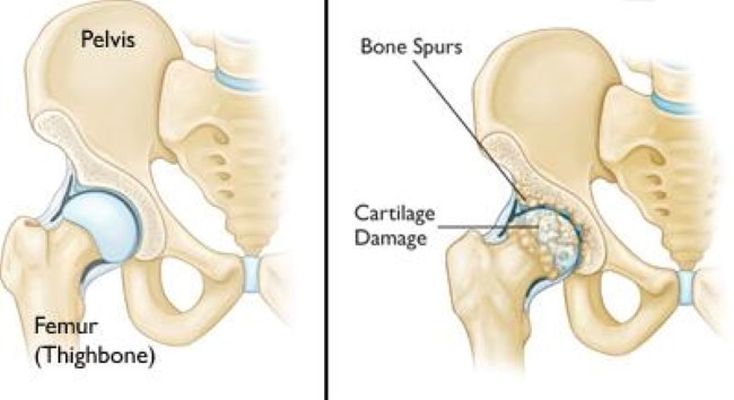
Coxarthrosis, or osteoarthritis of the hip joint, is a degenerative process characterized by the wear of the cartilage of the hip joint, as well as the formation of osteophytes and bone spikes along the perimeter of the joint. Clinically, coxarthrosis is manifested by contractures, stiffness in the hip joint, as well as atrophy of the muscles surrounding it. Coxarthrosis in the later stages leads to a significant decrease in the quality of life of the patient.

Initially, pain occurs after exercise, then the pain becomes constant and may even disturb sleep. Stiffness in the hip joint is first observed after a period of rest. Later, it progresses to such an extent that the patient has problems - for example, when putting on shoes or socks.

WHAT ARE THE CAUSES OF HIP ARTHROSIS?

When there is no clear cause for joint destruction, the term primary arthrosis is used in medicine.

Primary coxarthrosis is observed in 10-15% of people over 55 years of age. Women get sick more often than men. Osteoarthritis of the hip joint can occur without any apparent reason, but hard physical work and excessive physical activity can play a role in the development of the disease, for example, in sports, explains orthopaedic in Delhi.

Secondary coxarthrosis occurs against the background of existing diseases and congenital malformations, such as hip dysplasia, systemic and metabolic bone diseases (for example, gout and pseudogout). These diseases lead to a change in the shape of the bones forming the hip joint, and also violate the structure and quality of the cartilage tissue.

In addition, diseases such as Perthes disease, HIV infection, injuries of the hip joint, aseptic necrosis and epiphysiolysis of the femoral head are predisposed to the formation of coxarthrosis.

Inflammatory diseases that subsequently lead to the development of coxarthrosis are rheumatoid arthritis, ankylosing spondylitis and systemic lupus erythematosus, says orthopaedic in Dwarka.

SYMPTOMS OF COXARTHROSIS

Clinically, the disease is characterized by pain in the hip joint and lower limb, which initially occurs only at the beginning of the movement, but with the progression of the disease it is already present during movements, and at the final stage - even at rest. Pain is mainly localized in the groin, but can be reflected (radiating) to the knee. There is a decrease in the volume of all movements in the hip joint. In connection with the pain syndrome, lameness, joint stiffness, shortening of the limb appear and increase.

DIAGNOSIS OF COXARTHROSIS

In addition to the characteristic clinical picture, x-ray examination reveals a narrowing of the joint gap, bone spikes and osteophytes, deformation of the femoral head and acetabulum.

CONSERVATIVE TREATMENT

Pain and anti-inflammatory drugs can help the patient, and relief also brings warmth. Walking with a cane and physiotherapy exercises, aimed at maintaining mobility and stability in the hip joint, are recommended by orthopaedic in West Delhi. In the early stages, manual therapy can permanently eliminate pain. In addition, it is desirable to reduce the load on the hip joint during daily activities.

SURGICAL TREATMENT

Indications for surgery are progressive intensification of pain, pain at night and at rest, a sharp limitation of the patient's functional capabilities and activity, as well as severe deformation and shortening of the leg.

In a typical case - a patient older than 40 years, with a long-term pain in the hip joint and increasing functional impairment - optimal operation is a total hip replacement in Delhi. It reliably eliminates pain, restores mobility and ensures the stability of the hip joint.

WHEN CAN HIP REPLACEMENT REQUIRED?

The main indications for hip replacement surgery in Delhi are arthrosis of the hip joint (coxarthrosis), fracture of the femoral neck, aseptic necrosis of the femoral head.

With arthrosis, degenerative changes in the articular cartilage occur, which ultimately leads to cartilage wear. Bone growths (osteophytes) form around the joint.

Due to the deterioration of the cartilage, a decrease in its thickness, a significant decrease in smoothness, as well as a change in the shape of the articular surfaces, the friction in the joint increases, which leads to pain and a progressive violation of the movements in the joint.

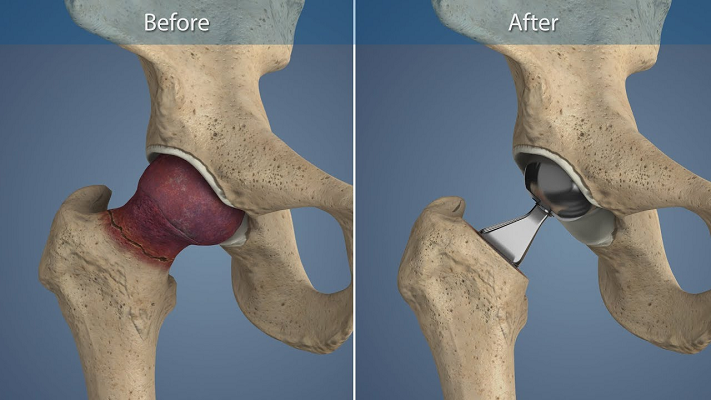
Aseptic necrosis of the femoral head is another cause of destruction of the hip joint. With this disease, the femoral head loses blood supply and actually collapses. The shape of the femoral head changes, the bone tissue making up the head is resorbed.

The articular surfaces of the acetabulum and the femoral head cease to correspond in shape, pain and impaired movement in the joint appear. The causes of the disease can be previous hip dislocations, birth injuries, prolonged treatment with corticosteroids, as well as some infections.

The main goal of replacing the joint in any of the degenerative diseases with an artificial one is to reduce pain and return movements. To do this, damaged surfaces are replaced with artificial ones, as a result of which the smoothness and painlessness of movements in the joint returns.

Fracture of the femoral neck is also an indication for hip replacement surgery in West Delhi.

In case of fractures of the femoral neck, the blood supply to the head is disturbed, in connection with which its gradual destruction occurs.

Fracture fusion in these conditions is impossible, surgery is the only way to activate the patient and return him to everyday activity, says orthopaedic surgeon in Delhi.

Tuesday, 24 March 2020

Hip Arthroplasty

Hip-Arthroplasty

Hip Prosthesis Surgery

The hip replacement in Delhi is an operation performed with a 10-12 cm incision and through which makes resection of the femoral head and the acetabular cartilage to allow for its replacement by an implant (prosthesis) of metal.

The hip prosthesis can be fixed to the bone by applying a special cement (cemented prosthesis), which adheres and hardens within a few minutes, allowing the load to patients immediately after hip replacement surgery in Delhi. It is ideal for older patients, with more osteoporotic bone, or who have worse bone stock due to rheumatism pathology.

Cementless prostheses are applied under pressure (press-fit). They are produced with a rough and porous surface, usually coated with hydroxyapatite, to allow a process of incorporation by bone growth into the interior of your pores, allowing a very firm and lasting fixation.

Generally, the application of a total hip prosthesis does not require general anesthesia, but a locoregional block, with the placement of a catheter to control postoperative pain.

Total Hip Arthroplasty

hip replacement surgery in West Delhi is a surgery that has undergone a major evolution. Its application is possible by mini-invasive techniques, which provide the patient with better and easier recoveries.

Also, in terms of instruments for placing the total hip prosthesis, technical advances have been made in order to make them more precise and versatile with solutions for the different types of hip to be replaced. This evolution was based on a better knowledge of the anatomy and biomechanics of the joint.

Finally, the interfaces between the femoral and acetabular components have also improved. In addition to the classic metal-polyethylene, it is possible to apply ceramic components that show wear rates and production of smaller particles, and therefore, allowing greater durability of the implants.

Partial Hip Arthroplasty

In some situations, in which the acetabulum is spared and a very elderly patient has suffered a fracture of the femoral neck, it is possible that the Orthopaedic in Delhi may choose to perform a partial hip arthroplasty, replacing only the femoral head and thus making a procedure simpler and less invasive for the patient.

This saves operational time and blood loss, which can be important in patients who are very weak and whose general condition needs to be optimized.

Hip Arthroplasty - Risks, Complications

Hip replacement in West Delhi is not without risks and complications.

First of all, there are complications that can occur in any joint replacement surgery in Delhi, regardless of the joint. These are hemorrhages, infections or venous thrombosis.

Then there are the specific complications of hip arthroplasty. At an early stage, during and immediately after surgery, vascular injuries (including injuries to the sciatic nerve), dysmetria and instability may occur, with the occurrence of dislocation of the prosthesis. In a later stage, periprosthetic fractures or even detachments of the prosthesis may occur.

Currently, the technical solutions available to the orthopaedic surgeon in Delhi are increasingly varied and versatile to solve these situations, namely with the use of the so-called hip arthroplasty revision surgery.

Hip Arthroplasty - Recovery

The recovery after performing total hip arthroplasty, is increasingly rapid and simple for the patient, since the surgery is less invasive, more effective control of pain and more accelerated rehabilitation protocols.

The recovery time is thus substantially reduced. Lift and load on the operated limb are allowed on the first day after surgery, with discharge to hospital generally occurring between the 3rd and 4th day. The stitches are removed at 15 days in the outpatient consultation and the patient usually dispenses with the use of external gait supports (Canadian), at around 3-4 weeks.

In our clinical practice, on the 1st postoperative day, the patient undergoing a total hip prosthesis begins a physiotherapy regimen, with a bi-daily visit by a specialized Physiotherapist in Delhi. Immediate mobilization prevents the occurrence of deep venous thrombosis, prevents muscle atrophy and facilitates lifting.

Physiotherapy starts immediately with exercises taught during hospitalization, namely gait training and up and downstairs.

After the first 2 weeks after a total hip replacement in Delhi, the exercises are specifically aimed at strengthening the muscles involved in walking, especially the glutes or swimmers (namely the middle).

Hydrotherapy is also recommended at a more advanced stage of recovery, in order to improve joint tone and proprioceptivity, as well as increase the patient's general well-being and confidence.

Hip Prosthesis Surgery - Price

The price of a hip surgery can vary according to the type of surgical intervention and the type of prosthesis placed. The amount may also fluctuate if the patient has any health insurance and associated conditions.

Only the orthopedic in Delhi can determine how much the operation costs, through a thorough analysis in the consultation.

Monday, 13 January 2020

Partial Hip Replacement Implants

Partial Hip Replacement

Partial hip replacement implants are generally used to treat a hip fracture in an elderly patient, rather than a hip damaged by osteoarthritis, for which total hip replacement is a treatment. It is usually an emergency surgery that is essential due to a fall or other accident that fractures the hip. Partial hip replacement surgery in Delhi is more correctly known as "hemiarthroplasty," or "hemi" means half of a joint because it replaces only the spherical part of the hip joint, not the cavity portion. A total hip replacement orthopedic implant, on the other hand, replaces acetabulum and the ball of the joint.

The most common reasons for fractures in the elderly are that they are fragile and not in good health. Your bones may be fragile due to osteoporosis, or they may be unstable in your feet and are more likely to stumble. It has been theorized that, at times, the hip bone of an older person can be weakened in such a way that it can really give in, causing it to fall, instead of the fall causing the hip to break, says orthopaedic in Delhi.

The treatment of hip fractures is dictated by the classification of the fracture and the viability of the head of the femur. Your surgeon will determine if your hip fracture can be repaired, or if the expected state of health and longevity qualify you for a partial hip replacement in Delhi, or if other aspects such as advanced osteoporosis require the need for a total hip replacement.

Partial Hip Implants

Unlike the total hip replacement implants that have a separate ball and stem, the classic partial hip replacement implants, pioneers in the 1960s and still in use today, include a complete ball design and stem. The unipolar design features a solid stem and a metal ball that replaces the femoral head and upper femur (thigh bone). The Thompson and Austin Moore prostheses are common examples of unipolar design, where hip movement occurs directly between the acetabulum (the hip cavity) and the prosthesis. Other more recently developed partial hip replacement implants are modular, allowing different combinations of head, stem and neck length, explains orthopaedic in Delhi.

Modular and unipolar devices are exclusive to partial hip replacement procedures and would not be considered as treatment for an arthritic hip, which needs a total hip replacement in west Delhi.
  1. An Austin Moore implant that is used without cement (bone grows through the holes)
  2. A Thompson prosthesis that is usually placed with bone cement.
  3. A modular prosthesis with a separate spherical head.
Like total hip replacement implants, partial hip replacement implants come in cementless and cemented versions. The means, the orthopedic implant can be placed in position either with the use of bone cement or without its use. One of the limitations of cementless fixation is the risk of instability and loosening due to possible poor bone quality in elderly and elderly patients.

Procedure and Recovery

Like a total hip replacement, the femoral head of the bone is removed from the upper thigh and the shaft is cut to accept the stem of the partial implant. The device is inserted and the surgical opening is closed, usually with vacuum drains to remove any excess blood drainage.

Recovery can be problematic if you are elderly and have poor general health. Several patients manage to have a good quality of life again, however, almost the same number of people end up requiring attention for a long time due to problems related to age and health. In general, partial hip replacement surgery in west Delhi is a less complex operation than total hip replacement, and generally provides satisfactory results for less active elderly patients with less life expectancy. In the case of more active elderly patients with a longer life expectancy, a total hip replacement is preferred for displaced femoral neck fractures.

Wednesday, 1 May 2019

Hip Replacement Improves Quality of Life

The Hip replacement surgery in Delhi is considered one of the most performed surgeries in India, mainly due to the increase in life expectancy.

When to have hip surgery? 3 Key Symptoms
The decision to enter the operating room is usually made when:
  • The pain is very intense.
  • The mobility is limited
  • The trouble prevents a normal life.
Quantitative data.
  • Throughout the year some 35,000 hip replacement in Delhi are performed. It is a growing number, not only because of the aging of the population (fractures, osteoarthritis) but also because of the tendency to place prostheses in younger and younger patients, thanks to good results.
  • The hip fracture data annually reaches 80,000 interventions in Indian patients.
  • Throughout the world, hundreds of thousands of hip arthroplasties are      performed annually.
  • Serious complications, such as hip joint infections, occur in approximately 10% of patients
  • "Between 50 and 65% of the elderly hip fracture operated recuperate the previous level of ambulation. Between 10 and 15% walk again, but only inside your home, and the remaining 20% ​​lose the ability to wander in and out of the home, " says orthopaedic in Delhi
  • 3 out of 4 patients live in their home before the operation.
  • 25% of patients after hospital discharge, decide to go for physiotherapy in Dwarka to improve their recovery, even to accelerate the improvement process.
Qualitative Data
• Elective surgery is not the same in patients with osteoarthritis than having to intervene urgently in the face of a fracture. In the first case, patients have time to prepare and prepare the environment, but not in the case of fractures.
• Thanks to the work of the geriatricians and social workers to care for these vulnerable patients who care for patients with fractures, morbidity, and mortality have been significantly reduced.
The success of the hip replacement in West Delhi does not end in the hospital. The subsequent recovery is fundamental.

3 diseases can end in Hip Operation
  • Osteoporosis, that is to say the decrease of the bone mass and deterioration of the microarchitecture of the bones, which supposes an increase in the fragility of the bones and the risk of suffering fractures.
  • Hip fracture generated by a fall.
  • Hip arthrosis caused by the wear of the tissue that covers the femur, pelvis, and bones that make up this joint.

When is hip surgery not recommended?
  • Patients with infections or a history of infection.
  • It does not have enough bone.
  • The bone is not strong enough to support a new hip.
  • He currently has nerve injuries in the hip area.
  • The hip is very unstable.
  • The bones are not fully mature or developed.
  • The patient suffers from diseases such as osteoporosis, rheumatoid arthritis and active skin lesions that can lead to infection.
  • You have damaged or non-functional muscles in your hip.
  • If the hip joint has been previously operated and is stable, functional and painless, it is not advisable to intervene again.
The data of hip fractures reach approximately 300,000 interventions in Indian patients annually

After the Operation, it is very important to know that ...
  • Clean and care for the wound to prevent further infections.
  • Avoid falls and dislocations.
  • If the patient passes his postoperative period at home, it is essential to review the rooms and reorganize the spaces during that recovery period.
  • Adapt a firm, comfortable and high seat that allows the knees to be slightly lower than the hips.
  • The success of the hip operation does not end in the hospital. The subsequent recovery is fundamental.
How much is the Recovery Time?

It is considered an operation with major surgery, therefore, after the hip replacement surgery in West Delhi, the patient is usually a week in the hospital. And once the wound is closing properly and the improvement the process is increasing, the recovery period can be several months.
It is true that from the moment the operation is performed by orthopaedic surgeon in Delhi, after a few days the patient begins to notice a marked improvement. 
The rehabilitation is essential for strengthening the entire area and regain mobility.

How long is a prosthesis?
Thanks to the latest technologies, it has gone from the average duration of 10 years to about 15 today.

Recommendations after a Hip Operation?
  • Avoid excess weight.
  • Strengthen the musculature surrounding the prosthesis.
Caring for the prosthesis avoiding abrupt exercises and unnecessary exercises.

10 Common Orthopedic Problems and Their Warning Signs

Our bones, joints, muscles, and ligaments support almost everything we do, from walking and climbing stairs to exercising and simply getting...