Sunday, 3 April 2022

Understand how to treat osteoarthritis and live without pain


Pain located in the hip, which appears mainly during the day or after getting up from a long period of sitting, may be caused by osteoarthritis of the hip, explains the orthopaedic in Delhi.

It is a problem that generates pain and decreases the patient’s movements, directly affecting the routine and the performance of simple activities, such as crossing the legs, getting into the car, tying shoes, standing, walking and performing physical activities, says the orthopaedic in Delhi.

Many people live with this type of pain for a long time and wonder if hip osteoarthritis is curable. In this article you will understand how to treat and control this problem.

Is hip osteoarthritis curable? Understand how it happens

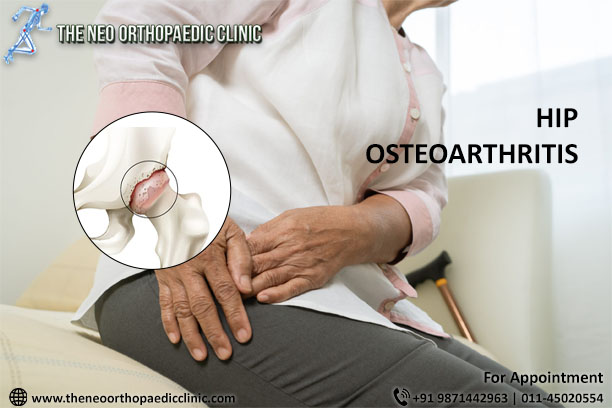
Osteoarthritis in the hip is a problem caused by the loss of cartilage in the joint, which ends up causing the pain generated by the friction of bones where cartilage should be.

This is because the cartilage present between the bones of all joints in the body does not have the ability to hurt. Thus, we can move all our joints, without noticing anything wrong.

The problem begins when a cartilage injury begins that causes the bones to come into contact with each other in the joint. As said, cartilage doesn’t hurt, but bones do. From this initial injury, a path of pain and wear begins, explains the orthopaedic in west Delhi.

In practice, the hip is formed by the junction of two bone structures:

  • Femur Head – It is the round part of the hip joint, formed by the femur bone, which is the thigh bone.
  • Acetabulum – It is the part of the pelvis cavity formed by the bones of the pelvis.

These joints fit perfectly and tightly, allowing for correct and completely pain-free movement of the hip. The problem is when this joint is affected by diseases that cause cartilage loss – as is the case with osteoarthritis., states the orthopaedic in west Delhi.

Know the symptoms of osteoarthritis in the hip

The symptoms of osteoarthritis of the hip tend to evolve over time and tend to start with mild, localized pain in the hip, says the orthopaedic doctor in Delhi.

As wear and tear on cartilage progresses slowly, initial symptoms are usually mild and worsen over time.

The pain tends to worsen with the effort used in simple activities such as standing and physical activities, improving only when the patient is at rest.

Faced with worsening and worsening of symptoms, the joint starts to block movement, preventing the patient from performing activities such as putting on shoes, crossing the legs or cutting nails.

In more advanced stages, there may be pain even at rest, says the orthopaedic doctor in Delhi.

After all, is osteoarthritis in the hip curable?

Osteoarthritis in the hip is a problem that, in and of itself, has no cure.

However, no desperation. There are treatments that can and should be performed in order to reduce pain and improve symptoms caused by cartilage damage.

The first step for anyone who wants to improve from hip pain is to correctly diagnose the cause of the pain. This will help determine the best treatment approach and, of course, the best outcome. The evaluation and trust in qualified professionals can make a patient stagnant in treatment, live again, says the orthopaedic in Dwarka.

Learn about the main ways to treat hip arthrosis:

1. Medicines

Patients who have severe, sharp pain may benefit from using anti-inflammatory drugs or corticosteroids in order to reduce inflammation quickly.

2. Changing habits

It is recommended that those who have joint problems develop some habits such as:

  • Avoid consumption of sugar, alcohol and saturated fats, as these types of food can increase inflammation and increase pain.
  • Reduce the physical activity that causes hip pain.
  • Keeping the body moving with physical activity that does not generate pain and has a controlled impact.
  • Reducing body weight helps not only to lessen the weight on the injured joint, but also to control the process of widespread inflammation caused by fat in the body.

3. Physiotherapy

Physiotherapy is done as part of treatment to reduce pain and reorganize body structures damaged by osteoarthritis.

It should be done with the guidance of a specialist physiotherapist, through analgesic and anti-inflammatory therapies, exercises that aim to improve joint lubrication, work on hip amplitude and function, as well as balance and body compensation techniques.

4. Exercises

It is recommended to practice physical activities that help to strengthen the thigh muscles and work on stretching the region.

Activities such as pilates, water aerobics and cycling should be part of the routine of people who suffer from osteoarthritis in the hip, in order to preserve movements and improve the frame.

But beware, each person must be evaluated individually. An activity that can do a lot of good for one type of person can accelerate hip wear and tear in another.

5. Hip Injection

Hip Injection is a technique that can be applied to the structures around or directly inside the joint, and it can have the function of reducing inflammation or improving the joint situation.

According to the objective, substances such as corticosteroids (to reduce inflammation) and hyaluronic acid (to improve joint lubrication and environment) are injected.

The type of injection must be done according to the medical advice of the specialist orthopaedic doctor in West Delhi, according to previous analysis and treatment objective for each patient.

6. Hip Replacement Surgery

Surgery for osteoarthritis in the hip should only be performed under the guidance of a specialist orthopaedic surgeon in Delhi. It is recommended when other treatments do not help to control pain or when there is a well-defined intrinsic benefit.

The hip replacement surgery in Delhi consists of removing the two parts of the diseased bone and placing components of hip prostheses. In these cases, after recovering from anesthesia, while still under observation, the patient begins to walk with a walker, continuing the treatment with a physical therapist.

Osteoarthritis in the hip is treatable

Osteoarthritis in the hip has no cure, but it has treatment that should be used to reduce and control pain, regain joint mobility and return the patient’s quality of life, says the orthopaedic in Delhi.

With medical guidance, it is possible to control symptoms and identify the best way to lead a pain-free life without limitations due to osteoarthritis in the hip.

Living with pain is not normal. Look for a specialist orthopaedic doctor in Delhi to treat hip arthrosis and resume your routine activities.

Sunday, 20 March 2022

Types of knee prosthesis


Knee osteoarthritis is not the same for everyone. Therefore, the prosthesis cannot be the same for everyone. For each type of arthrosis, orthopaedic in Dwarka indicate a different prosthesis.

Unicompartmental or partial prosthesis

This prosthesis replaces only 1 part of the knee. We can divide the knee into three parts, the medial tibiofemoral, lateral tibiofemoral and patellofemoral.

When the person has osteoarthritis of only 1 of these parts, we can make a unicompartmental prosthesis. As it is not of the whole knee, we also call it a partial prosthesis.

bi-unicompartmental prosthesis

It is the union of 2 unicompartmental prostheses in the same knee, for example the patellofemoral unicompartmental and medial tibiofemoral. This type of prosthesis is made when the person has already made a unicompartmental prosthesis and has started to give problems in another part of the knee.

The bi-unicompartmental prosthesis can also be performed in the first knee replacement surgery in Delhi, when the person already has 2 parts of the knee with arthrosis (wear).

Total surface prosthesis

It is a prosthesis that takes the entire knee. There are several types of complete prosthesiss and one of them is the surface. This is the most performed when performing the first prosthesis surgery in the individual.

The total surface prosthesis has different types of models, such as some that maintain the posterior cruciate ligament, others that remove it, and others that have a rotating platform to better simulate the natural movement of the knee.

constricted complete prosthesis

This type of prosthesis is most used in cases of prosthesis revision, that is, in those people who have already made a prosthesis (of any of the types that I have already mentioned) and need to exchange it for a new one.

The constricted complete prosthesis can also be used in the first surgery, when the arthrosis is very severe. In addition, there are several levels of constriction of the prosthesis, ie, how much the prosthesis is able to “firm” the knee.

There are prostheses that we can call semi-constricted (also called non-connected), which are those that place rods (a kind of metal tube), shims (these are pieces to fill holes in the bone), tantalum cones, and have a special design to make the knee firmer, but not so firm as to greatly reduce knee mobility.

On the other hand, constricted prostheses, in addition to allowing the placement of rods, shims and cones, have the differential of restricting even more the movement of the knee and, therefore, are performed in even more severe cases.

We call these constricted prostheses hinged (or connected) prostheses because they function like a hinge on a door. And they are called connected because the femur component (piece that is on the thigh bone) is attached to the tibia component (leg bone).

Megaprosthesis or endoprosthesis

This type of prosthesis is also constricted, with the differential of having modules, which are metal bars that replace large pieces of bone.

Some megaprosthesis models are similar to those of amputees and, therefore, are called endoprosthesis.

As you may have already noticed, the megaprosthesis is performed in the most serious cases that exist, when the person loses almost the leg or the entire thigh. Therefore, it is also performed in people who suffer from bone cancer.

Before choosing the ideal prosthesis for you, we specialist knee orthopedists need to evaluate your knee through physical examination and imaging tests (radiography and tomography for example). So, if you have osteoarthritis in your knee, be it more or less severe, consult an orthopaedic in Delhi check the best type of prosthesis for you. Take care and prevent yourself!

Wednesday, 9 March 2022

The 3 main causes of hip popping


Many people when they walk, sit or simply move their leg, they hear or feel a popping sound coming from the hip joint. Others feel an audible click every time they bend their hips.

For other people, the pop can be seen with the twitching of the lateral muscles and the strange sensation that the hip has “gone out of place”. Others still feel a snap with the perception of locking accompanied by difficulty in moving.

Almost always, the hip crack does not come with pain. And while it may seem harmless, this condition can sometimes be the first sign that something is wrong with the hip, which can lead to further damage, explains the orthopaedic surgeon in Delhi.

Young women, athletes and dancers often experience this painless sensation harmlessly. So much so that snapping or snapping hip syndrome is also known as dancer’s hip.

What Causes Hip Cracking or Cracking?

There is not just one cause for the hip popping sensation. It can appear by changes in some structures around or even within the joint.

Knowing the cause of the problem makes all the difference not only for treatment, but also for identifying the severity and monitoring the injury, says the orthopaedic in Delhi.

External Hip Snap (on the side of the hip)

This first type of snapping is the most common cause of hip cracking. Often felt as a bump on the side of the hip, which can often be palpable.

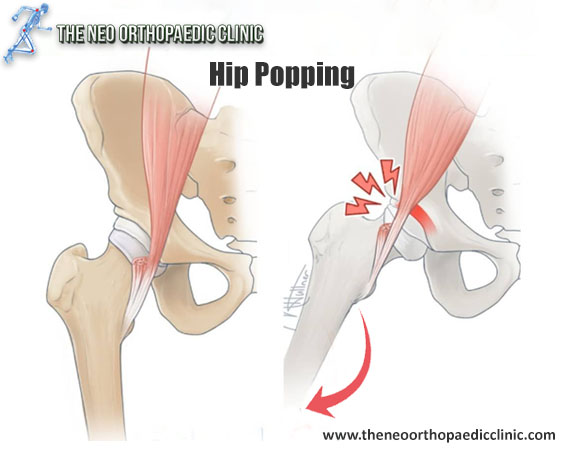
It happens through the passage of the tendon from the side of the hip (iliotibial tract) over the most lateral portion of the femur bone (great trochanter).

When we walk or sit, this powerful tendon passes backwards and forwards from the bony ridge of the femur in a smooth motion. In some people, the hip bone can stick out and the tendon can become so tense that it ends up catching on the back of the bone.

If the person forces the movement, the tendon unscrews from the bone and passes quickly forward producing a snap and click.

The click occurs during the movement of bending or straightening the hip, when running or climbing stairs. Physical activities such as golf or efforts such as carrying suitcases or heavy backpacks can trigger rebound more easily.

Women are more affected by this type of snapping, as their hip and femur bones are more lateralized than men. This is because of the adaptation of female pelvis because of the birth canal.

Generally, this condition does not generate pain, only the sensation that it is possible to disengage the hip from its place – which does not really happen. Eventually, inflammation of the bursa, called bursitis, may occur as an associated disease, explains the orthopaedic doctor in Delhi.

Inner Hip Bump (in front of hip)

As with the side of the hip, the innermost part also has a popping or popping shape. The internal snap is caused by the tendon of the iliopsoas muscle, a powerful flexor of the thigh.

The movement of bending the hip with the leg rotated can lock the iliopsoas tendon over the head of the femur or over the edge of the pelvis cavity. When the tendon is too tense or the edge of the socket is too prominent, a movement with resistance is created that produces the click.

This form of clicking is felt as if it were on the inside of the joint, anterior to the hip and radiating to the groin. Because it is deep, it is not visible.

In this type of rebound, the hip pops when running, when rising from a sitting position, or when rotating the leg away from the body.

In some cases, internal snapping can damage the most peripheral cartilage of the hip joint, known as the labrum, and be associated with pain, explains the orthopaedic surgeon in Delhi.

Snapping from problems within the joint

A problem with the hip joint can cause the third type of click. Injuries with detachment or inflammation in the hip cartilage can produce a clicking, locking, and painful sensation.

Snapping due to cartilage damage can happen suddenly after trauma, such as a fall. Or even in people with wear and tear, osteoarthritis in the hip, in which symptoms may be less important and are associated with inflammation in the joint.

Loose pieces of bone or cartilage can lock the hip, causing pain and difficulty moving, explains the orthopaedic surgeon in Delhi.

Hip cracking is treatable

For most people with a cracked hip, without symptoms of pain, joint rehabilitation is enough to avoid injury or disability.

Ideally, you should receive a thorough medical evaluation regarding joint movement and possible risk factors, such as wear and tear. Anyone with a snap or click and pain should see a specialist orthopaedic in Delhi.

Conservative treatment

  • Rest: People with clicking in the hip joint should avoid movements that cause the click and restrict the overload on the joint, bursa and tendons. If the action of dancing, running or climbing stairs generates symptoms, these activities should also be excluded.
  • Medication: the use of anti-inflammatory drugs, for a short period of time, can make the rehabilitation period easier, especially for cases with pain and a lot of inflammation.
  • Physical Therapy: Some physical therapy techniques can help relax the muscles and tendons that cause internal and external snapping. Therapies that accelerate healing and decrease pain may also be employed.
  • Corticosteroid injection: hip injections may be a good option for the treatment of chronic pain conditions or those that do not improve with the above treatment measures. It is worth mentioning that it is not able to cure tendon tension, but it is a strong aid in controlling inflammation.

Surgical treatment

Hip cracking is very common among athletes and women. Even when there are symptoms of pain, he responds very well to non-surgical treatment, such as medication and physical therapy.

Only a minority of cases benefit from surgical treatment. Therefore, the correct type of procedure will depend on the cause of the pop, explains the orthopaedic doctor in Delhi.

Video arthroscopy of the hip is the most suitable method for cases of cartilage injury, with the aim of preventing the progression of the injury to wear.

In cases of tendon shortening, its lengthening or release can be performed by video arthroscopy in Delhi, depending on each particular situation.

Most importantly, whenever possible, determine the cause of the hip snap. Only then will there be a diagnosis of an injury that may eventually worsen in the future.

If you feel a click in your hip, avoid doing any activity that causes pain or reproduces the click.

And remember, keep your life moving.

Sunday, 6 March 2022

What is a total knee replacement?


Total Knee Replacement

The knee is one of the most important joints in the human body, and it allows you to walk, run and do a multitude of tasks. However, it can be affected by some diseases, being osteoarthritis one of the most limiting, explains the orthopaedic in Delhi.

Severe pain, stiffness, inability to move as before and swelling in the knee are symptoms indicative of osteoarthritis, that is, wear and tear on the knee.

In cases where the patient is very limited and does not improve with non-surgical treatment, also called conservative treatment, knee replacement surgery in Delhi may be necessary to place the total knee prosthesis.

Total knee replacement: understand more about this surgery

The prosthesis is a device that we implant in the diseased knee of people with arthrosis. Most often, the prosthesis is made of a metal alloy composed of chromium and cobalt. These metals are biocompatible, that is, they have a low risk of being rejected by our body. Therefore, they can be deployed safely. The procedure used by the orthopaedic surgeon in Delhi to place the prosthesis in the patient’s knee is called total knee arthroplasty.

After all, what is total knee arthroplasty?

This is a major surgery, characterized by the replacement of the diseased part of the knee with a new material, the prosthesis. When the entire knee is affected by arthrosis, we perform total arthroplasty. When only a small part of the knee is diseased, we can do partial arthroplasty, also called unicompartmental knee arthroplasty, explains the orthopaedic in Delhi.

Who is this surgery recommended for?

Patients with an advanced degree of arthrosis, who have severe movement limitations, severe pain, and who have not had satisfactory results with non-surgical treatment (eg, medications, physical therapy, viscosupplementation, platelet-rich plasma, shock waves, denervation of the geniculars).

Added to this, there are patients with arthrosis so severe that they are already directly indicated to undergo knee replacement in Delhi. Such patients are those with severe ligament instability (absence of ligament function), major bone deformity (varus or valgus greater than 20 degrees), or significant bone loss, explains the orthopaedic surgeon in Delhi.

I’m too young or too old to get a prosthesis. Is this right?

There is no maximum age to undergo surgery. What we assess, in the case of elderly patients, are their clinical conditions, that is, whether they support the procedure.

I have operated on patients over 90 years old with excellent results, without complications. Postoperative mortality is currently low and technology develops daily to make surgery even safer. Therefore, before fearing surgery, seek proper guidance from a trained orthopaedic in Delhi.

As for the younger patient, that is, those under 60 years of age, we prefer to postpone the procedure as much as possible, considering the durability of the prosthesis. After 10 years of the procedure, the number of people whose prosthesis remains functioning properly decreases progressively. As the young have more years to live than the elderly, the chance of the young person needing multiple replacements of the prosthesis is greater, says the orthopaedic doctor in Delhi.

In any case, what we take most into consideration is the patient’s quality of life. If the arthrosis is significantly deteriorating the quality of life, we opt for knee replacement surgery in Delhi. Otherwise, we maintain non-surgical treatment.

How long does a prosthesis last?

Just as your knee wears out, the prosthesis wears out over time. Studies show that the prosthesis lasts well for 10 years in 95% of people. After 20 years, the rate drops to 90%, but there is still a significant amount of people who continue with the prosthesis in good condition.

Friday, 4 March 2022

Knee Pain - Causes, How to Treat and Relieve Pain


Knee Pain

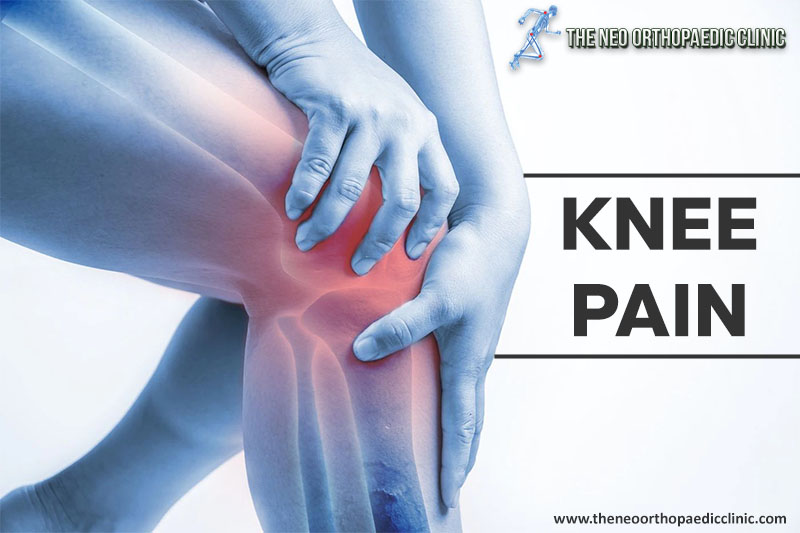
Knee pain is one of the most frequent in the human body. It affects both the elderly, usually having a degenerative origin, and young individuals usually due to traumatic injuries or problems with the alignment of the kneecap (so-called patella syndromes), explains the orthopaedic surgeon in Delhi.

Generally, knee pain (whether mild or severe) has a pathological meaning, that is, there is a pathology or disease that is at the origin of it.

Constant knee pain is an indication (or symptom) that something is not right. In other situations, knee pain can be caused only by a specific situation of overload of effort, such as what occurs on a longer walk, or climbing inclines, or carrying excessive weights or even in more intense sports training. In these cases, a period of rest or sport break may be enough to resolve the situation, advices the orthopaedic in Delhi.

Knee Pain

For a better nosological characterization, there are several classifications of knee pain that systematize its various parameters:

  • Knee pain location (anterior; posterior; medial or lateral interline; collateral ligament insertions; pes anserinus; iliotibial band; inferior pole of kneecap);
  • Intensity of knee pain (mild; moderate; severe);
  • Character of pain (prick; penny);
  • Evolution time (acute or chronic);
  • Laterality (left knee pain or right knee pain);
  • Triggering factor (eg knee pain when squatting; knee pain after walking);
  • Antalgic position (eg, improving pain with a bent knee);
  • Response to anti-inflammatory medication;
  • Accompanying symptoms (eg, crepitus; effusion; knee bounce or failure; blockage).

Causes of knee pain

The causes of knee pain can be numerous. Here are just a few of the most frequent ones.

knee arthrosis

Knee osteoarthritis is one of the most frequent causes of knee pain. Degenerative changes in the knee cartilage cause a “swollen” knee, due to the presence of joint effusion, chronic pain, of a slow evolution in the knee, of a mechanical nature (that is, which worsens with movements) in addition to joint crepitus (which the patients describe as “pain in the knees with popping”), explains the orthopaedic in Delhi.

meniscus injury

A sudden, sharp, internal pain or pain in the back when the knee bends is usually due to a meniscus tear. In this picture of knee pain, other symptoms are present such as edema (“swollen knee or knee swelling”) from intra-articular effusion. A baker’s cyst, which occurs when this fluid accumulates in a pouch behind the knee, can also be a cause of pain and discomfort later on, states the orthopaedic surgeon in Delhi.

knee sprain

Knee sprains can range from a simple strain, partial tear to a complete tear of the collateral ligaments, which result in pain with 2 distinct locations: medial knee pain and lateral knee pain. The cruciate ligaments are intraarticular and can rupture without causing great pain, so their clinical diagnosis is not always easy, says the orthopaedic doctor in Delhi.

Rheumatism

Knee pain due to rheumatism is usually inserted in a condition in which the patient reports polyarthralgia, that is, pain in multiple joints. The most frequent rheumatic pathology usually includes diseases such as rheumatoid arthritis and gout (due to an increase in uric acid).

Currently, with the development of biological therapies, it is possible to control the progression of rheumatic disease, but in advanced cases of rheumatoid knee, for example, arthroplasty surgery (through the placement of a total knee prosthesis by knee replacement surgery in Delhi, similarly to what is done in osteoarthritis of the knee).) allows reducing pain and restoring the patient’s quality of life, says the orthopaedic surgeon in Delhi.

patella syndrome

Patellar syndromes (what patients call a misaligned kneecap or kneecap out of place) are also a cause of knee pain. In extreme situations, patellar instability can result in kneecap dislocation.

Patellar syndromes normally affect young adults, requiring an adequate study of patellofemoral relationships. Strengthening and rebalancing the quadriceps muscles, namely the vastus internus oblique, are decisive in reducing the external hyper pressure of the kneecap, but surgery to realign the extensor apparatus may be necessary to reduce anterior knee pain and prevent progression to kneecap arthrosis, says the orthopaedic in Delhi.

knee tendonitis

Knee tendinitis usually causes pain at the insertion site of the inflamed tendon. They are most often located at the inferior pole of the patella, quadriceps insertion and the tendons of the pes anserinus. They usually force the patient to make ice, anti-inflammatories and rest for very variable periods, but generally have a good prognosis.

knee bursitis

Knee bursitis is caused by inflammation of the bursae or synovial pouches around the knee. They usually result from long periods of placing the knees on the floor, as in certain professions or activities (maids, religious, floor laying, etc…) especially in the pre-patellar area or pre-tibial tuberosity.

Other causes of knee pain

Although we have presented the main causes of knee pain, other pathologies may be at its origin. Consult orthopaedic surgeon in Delhi to get the proper diagnosis and treatment.

Thursday, 17 February 2022

ARTHROSCOPY: DIAGNOSTIC AND THERAPEUTIC PROCEDURE ON THE RISE


arthroscopy

What is arthroscopy?

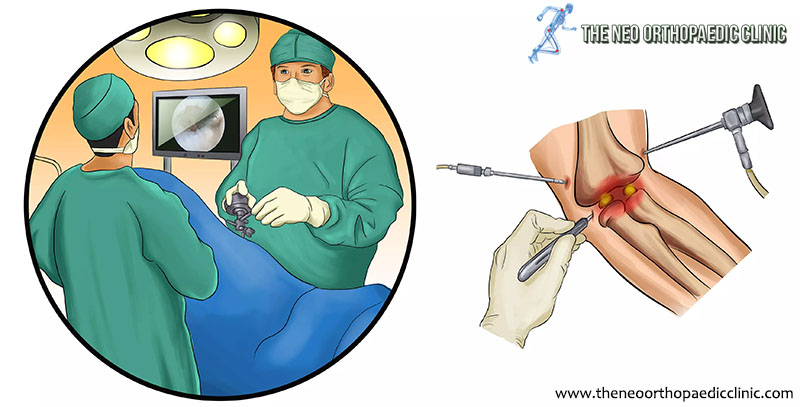
Arthroscopy in Delhi is a minimally invasive procedure used for the diagnosis and treatment of conditions that affect the joints. The doctor can view the internal structures of the ligaments directly by using an instrument called an arthroscope.

Orthopaedic surgeon in Delhi uses the arthroscope to diagnose and treat joint problems. An arthroscope is a small, tube-shaped instrument used to view the inside of a joint.

It consists of a lens system, a small video camera, and a viewing light. The camera is connected to a monitoring system that allows the doctor to view a joint through a very small incision. The arthroscope is often used in conjunction with other instruments that are inserted through another incision.

The joint most often examined by arthroscopy is the knee. However, arthroscopy can be used to examine other joints, including the following:

  • Shoulder
  • Elbow
  • Ankle
  • Hips
  • Wrist

knee anatomy

Joints are the areas where bones meet. Most joints are mobile and allow the bones to move. Basically, the knee is made up of two long leg bones joined by muscles, ligaments, and tendons. Each end of the bone is covered by a layer of cartilage that absorbs shock and protects the knee.

There are two groups of muscles involved in the knee, including the quadriceps muscles (located in the front of the thighs), which straighten the legs, and the hamstring muscles (located in the back of the thighs), They bend the leg at the knee level.

Tendons are tough cords of tissue that connect muscles to bones. Ligaments are elastic bands of tissue that connect bones to each other. Some ligaments in the knee provide stability and protection for the joints, while other ligaments limit the back and forth movement of the tibia (shinbone).

The knee is made up of:

  • Tibia. Shin bone or largest bone of the lower leg.
  • Femur. Thigh bone or upper leg bone.
  • Ball joint. Knee bone.
  • Cartilage. A type of tissue that covers the surface of a bone at the joint. Cartilage helps reduce friction from movement within a joint.
  • synovial membrane. Tissue that lines the joint and seals it into a joint capsule. The synovial membrane secretes synovial fluid (a clear, sticky fluid) around the joint to lubricate it.
  • Ligament. A type of tough, elastic connective tissue that surrounds the joint to provide support and limit movement.
  • Tendon. A type of tough connective tissue that connects muscles and bones and helps control joint movement.
  • Menisci. Curved part of the cartilage of the knees and other joints that acts as a shock absorber.

Reasons to perform the procedure

An arthroscopic procedure may be used by orthopaedic in Delhi to diagnose and help treat the following conditions:

  • Swelling of the knee, shoulder, elbow, wrist, or ankle
  • Injuries, such as rotator cuff tendon tears or shoulder impingement syndrome (compression of the shoulder tendons caused by excessive squeezing and rubbing of the rotator cuff and scapula)
  • Cartilage damage, such as tears, injuries, or wear
  • Ligament tears with knee instability
  • tendon damage
  • Carpal tunnel syndrome in the wrist
  • Loose bones and/or cartilage, particularly in the knee, shoulder, elbow, ankle, wrist, or hip

Corrective surgery or biopsy may be done using arthroscopy. For example, torn ligaments can be repaired or rebuilt. Arthroscopic surgery in Delhi may eliminate the need for an open surgical procedure.

Your orthopaedic doctor in Delhi may recommend an arthroscopy for other reasons.

Friday, 11 February 2022

Orthopedics: know all about

Orthopedics is one of several possible specialties within medicine. The orthopaedic in Delhi is responsible for taking care of deformities of bones, ligaments, joints, muscles, elements related to the locomotor system as well as diseases.

What does the orthopedic do?

The orthopedic can work in surgeries, studies, treatment of problems related to human locomotion, prevention, and in diseases that affect tendons, ligaments, muscles, joints and bones. On a day-to-day basis, your tasks are:

Make inquiries

This professional can see patients in their office, in an orthopedic or specialty clinic, or even in a hospital. He evaluates his patients' complaints, as well as the symptoms, to detect possible problems, injuries or traumas that may have been suffered.

Request exams

The exams are essential for the orthopaedic in Dwarka to analyze the patient's clinical condition more deeply. For this reason, he may request these procedures according to his suspicions or according to the needs of each case.

Provide diagnostics

There are orthopedic problems that can be diagnosed on the patient's first visit, however, there are others where it may be necessary to read the exams to obtain a more accurate diagnosis or to clarify doubts.

Prescribe medication

The orthopedic also has the function of prescribing medication, which can be both for the relief of symptoms, and anti-inflammatory drugs, which have a more complete approach. The prescription will depend on each case, as well as the need of each patient.

Indicate treatments

The use of medication is only one of the therapy options for lesions treated by orthopedics. The orthopedic can also indicate to his patient other types of treatment, according to the presented picture.

It is normal for patients seen by an orthopedic to need:

  • Physiotherapy;
  • Physical exercises;
  • Targeted and specific physical activities.

The orthopedic has the ability to advise the patient on tasks or activities that he can or cannot perform.

This is the reason why people with back problems or limitations in the joints and in certain parts of the body need the authorization of this doctor to practice sports, attend gyms or other actions that demand physical effort.

Carry out follow-ups

Not always patients who consult with the orthopedic in Dwarka have a problem that requires treatment. There are cases where the monitoring of the clinical picture is enough to guarantee the health and quality of life of the patient.

This makes this specialist also carry out the follow-up of people who have some propensity to develop orthopedic problems.


Main diseases treated by an orthopedic

Some orthopedics specialize in body parts, such as those who care for the hands and wrist, treat conditions such as tendonitis, trigger finger, carpal tunnel syndrome, osteoarthritis, buttonhole finger, and fractures.

There are also those who treat congenital problems, such as malformations, dysfunctions and patients who develop lifelong complications or sequelae from trauma and accidents. Generally, the orthopedic treats:

  • Arthrosis;
  • growth problems;
  • Low back pain;
  • Meniscus injuries;
  • Sprains;
  • herniated disc;
  • Joanete;
  • Bursite;
  • Claw finger;
  • Rupture of ligaments;
  • Femoral neck fracture;
  • Diabetic foot;
  • Plantar fasciitis.

It is very common for the orthopedic professional to work together with the physical therapist, ensuring better results and a more complete treatment.

When should I see an orthopedic?

Feeling pain is not normal and in the same way that we look for a doctor when we don't feel well, whether due to fever, gastric discomfort, dizziness or skin sores, it is also necessary to look for an orthopaedic doctor in Delhi when there is pain in the bones, muscles or joints.

These pains or discomfort can be symptoms of an orthopedic disease that is manifesting itself, or that has already set in. That's why it's important to see an orthopedic in Delhi if you have:

  • Constant back pain;
  • Excessive tiredness;
  • Tingling;
  • morning stiffness;
  • Heat in the joints.

It is also important to pay attention to swelling that may appear in your joints, as well as changes in your body structure. You should look for the orthopedic if you have suffered an injury or feel pain after performing some physical effort, or if you have suffered trauma, such as a blow.

As the problem does not always manifest itself in a superficial way, orthopedics takes care of the parts of the body that are more hidden, which cannot be seen with the naked eye.

So that annoying little pain after football or that came when carrying a very heavy box may not just be nonsense, but an indication that some more serious problem requires attention.

The orthopedic is a very important professional, and that is why he should be consulted whenever there is discomfort, limitations of movement, there is an accident, trauma or the propensity for the development of orthopedic diseases.

Seek the help of the orthopedic surgeon in  Delhi so that small problems do not turn into major complications.

Difference between orthopedic and rheumatology

Orthopedics deals with mechanical problems that are related to the musculoskeletal system, such as dislocations, fractures, ligament injuries and others, while rheumatology is responsible for inflammatory processes that affect joints and tissues, such as fibromyalgia, osteoporosis, rheumatoid arthritis, tendinitis and others.

If there are doubts about when to look for an orthopedic or a rheumatologist in Delhi, look for a general practitioner first, he will indicate the appropriate professional.

10 Common Orthopedic Problems and Their Warning Signs

Our bones, joints, muscles, and ligaments support almost everything we do, from walking and climbing stairs to exercising and simply getting...