Wednesday, 17 April 2019

What is total knee replacement?

total_knee_replacement

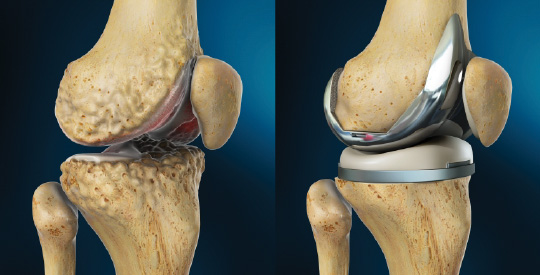
The knee replacement surgery (arthroscopy in Delhi) or total knee prosthesis is an operation consisting of the replacement of a damaged, worn or diseased knee with an artificial joint (prosthesis).

Adults of any age can be considered for a knee replacement in Delhi, although most are performed on people between the ages of 60 and 80.

A knee replacement usually lasts more than 20 years, especially if the new knee is used correctly and is not subjected to too much stress.

Causes of total knee replacement

The most common cause of chronic knee pain and disability is arthritis.
Although there are many types of arthritis, most knee pain is caused by only three types:
  • Osteoarthritis
  • Rheumatoid arthritis
  • Post-traumatic arthritis
Osteoarthritis

It usually occurs in people 50 years of age and older, but it can occur in younger people.

The cartilage that cushions the bones of the knee softens and wears out.

The bones rub against each other, causing pain and stiffness of the knee.

Rheumatoid arthritis

This is a disease in which the synovial membrane that surrounds the joint becomes inflamed and swollen.

This chronic inflammation can damage the cartilage and eventually cause the loss of cartilage, causing pain and stiffness.

Rheumatoid arthritis is the most common form of a group of disorders called "inflammatory arthritis."

Post-traumatic arthritis

This type of knee arthritis can result from a serious knee injury.

Fractures of the bones that surround the knee or ruptures of the knee ligaments can damage the articular cartilage over time, causing pain in the knee and limiting the functioning of the knee.

Complications of total knee replacement

As with any surgery, joint replacement surgery in Delhi carries risks and complications may occur
For knee replacement surgery, these risks are low. Possible complications include:

Infection

The infection may occur at the site of the wound or around the prosthesis. It can happen while you are in the hospital or after you go home. They can even occur several years after the surgery.

Minor infections in the wound area are usually treated with antibiotics.

Major or deep infections may require another surgery to remove the prosthesis.

Any infection in your body can spread to the area of ​​the joint that has been replaced.

Blood clots

Blood clots in the veins of the legs are one of the most common complications of knee replacement in Dwarka. These clots can be life-threatening if they break down and travel to the lungs.

Preventive measures may include:
  • Periodic elevation of the legs
  • Exercises to increase circulation in the leg
  • Support stockings
  • Medications to thin the blood.
Problems with the implant

Although implant designs and materials, as well as surgical techniques, continue to advance, the surfaces of the implant may wear out and the components may loosen.

Movement of the knee may be more limited, particularly in patients with limited mobility before surgery.

The risk of failure of the prosthesis is greater if the joint is endeavored with activities of high impact or excessive weight.

Continuous pain

A small number of patients continue to have pain after a knee replacement in West Delhi. This complication is uncommon, since the vast majority of patients experience pain relief after knee replacement.

Injury of the nerves and blood vessels

Although uncommon, injuries to nerves or blood vessels around the knee can occur during surgery.

Other complications:
  • Allergic reaction to anesthesia
  • Temporary or permanent numbness around the wound site
  • The amputation of the leg due to a serious wound infection of the surgery.
  • Paralysis of the foot due to nerve damage
  • Lack of blood supply to the leg due to damage to the blood vessels (which can lead to amputation).
Signs of infection

Although the risk of infection is low, notify your orthopaedic in Delhi immediately if you notice:
  • Fever higher than 37.8 C
  • Shaking chills
  • Secretions in the area of ​​surgery
  • Increased redness, swelling and pain in the knee
  • An infected knee replacement usually requires surgery to remove artificial parts and antibiotics to kill the bacteria.
After the infection is controlled, another surgery must be done to install a new knee.

The chances of a good or excellent result that reduces pain and improves knee function tend to decrease with each additional surgery

How is a total knee prosthesis placed?

With the patient under anesthesia, the orthopaedic surgeon in Delhi replaces the damaged joint with an artificial prosthesis.

In the knee, the bony ends of the femur and the tibia are replaced by prosthetic components that articulate with each other and with the kneecap, which in most cases is also replaced.

A prosthesis can be implanted in other joints although the most common surgeries are those of the knee and hip.

The materials used in total prostheses are designed to allow mobility similar to that of the normal joint.

The components of the prosthesis are usually composed of a metal element that fits exactly in a plastic.

Various metals are used: stainless steel, cobalt alloys, chromium and titanium.

The plastic is an extremely durable and wear-resistant polyethylene.

A type of cement is usually used to fix the components to the bone, although there are also uncemented prostheses, which are anchored directly to the bone.

Types of knee replacement surgery

There are two main types of surgery, depending on the condition of the knee:

Total knee replacement - both sides of the knee joint are replaced

Partial knee replacement - only one side of the joint is replaced in a smaller operation with a shorter hospital stay and recovery period.

How long does a knee replacement last?

Improvements in surgical techniques, technology and materials have made knee replacement surgery one of the most successful procedures done by orthopaedic in Dwarka.

Most people experience less pain, increased movement and a better quality of life.

However, implants do not last forever. It is expected that implants should work for a minimum of 15 to 20 years in 85-90% of patients.

Over time, the wear loosens the implants and these can cause pain, have loose particles, cause infection and instability.

Once this happens, orthopaedic in West Delhi recommend undergoing revision knee surgery.

Recovery from knee replacement surgery

Usually, you will be in the hospital for three to five days, but the recovery time may vary depending on the person and the type of surgery that is performed.

Once you are able to be discharged, your hospital will give you advice about taking care of your knee at home.

You will have to use a walking frame or crutches at first and a physiotherapist in Dwarka will teach you exercises to help strengthen your knee.

Most people can stop using help to walk around six weeks after surgery and start driving after approximately eight to 12 weeks.

Full recovery can take up to two years.

A very small amount of people will continue to experience some pain after two years.

Friday, 1 March 2019

Knee Replacement Clinic in Delhi

Knee

The specialized kneeling services offered by orthopaedic in Delhi is a comprehensive approach to the care and management of knee injuries and diseases. Orthopaedic in West Delhi uses many of the new techniques and technologies in this field. The team of specialists offers cutting-edge experience in the evaluation and treatment of a wide range of diseases and injuries that can occur at any stage of life and that affect both adolescents and the elderly. Our service is among the most experienced in Delhi.

The services include the following:
  • Evaluation of diseases and injuries of the knees.
  • Conservative treatments to preserve or correct the knee in order to relieve pain and restore mobility, including injection therapy.
  • Minimally invasive procedures, arthroscopy in Delhi.
  • Latest techniques in sports injury surgeries, including the reconstruction of the ligament complex.
  • Advanced care of the knee fracture.
  • Knee replacement surgery in Delhi, including complex revision surgery.
  • Rehabilitation, advanced therapy.
Our program is unique in its kind in Delhi: it offers vast experience and treatment options available for the evaluation and management of knee problems. Our orthopaedic doctor in Dwarka experience-based care to treat knee problems in people of any age. Whether it's the professional athlete or the weekend warrior, the orthopaedic in Najafgarh can offer you the best knee care in Delhi.

Best knee surgeon in Delhi works with a team to devise a comprehensive and personalized treatment and rehabilitation plan for our patients. In addition to other doctors, the team has nurses, physiotherapists, occupational and recreational therapists and social workers.
  • The team of orthopaedic in Janakpuri provides comprehensive care, considering the individual needs of the patient and always for the benefit of the patient.
  • Our team of specialists is at the forefront of technology and minimally invasive surgery (including arthroscopic procedures for knee surgery). 
  • Orthopaedic in Palam pioneered many of the innovative techniques currently used, emphasizing patient safety and long-term mobility.
  • Thanks to its vast experience and research carried out, Orthopaedic in Tilak Nagar can offer alternatives to patients, including innovative ways to minimize the need for invasive procedures as well as prevent joint replacement.

Tuesday, 29 January 2019

Knee Joint Replacement Surgery (Arthroplasty)

Knee Replacement

IF YOU CONSIDER THAT THE PAIN AND THE DISABILITY OF YOUR KNEE ARE SO IMPORTANT TO ALTER YOUR QUALITY OF LIFE, you may opt for a knee replacement surgery by orthopaedic in Malviya Nagar.

This is a surgery that consists basically of replacing some or all of the damaged parts of the knee with synthetic elements commonly called PROTESIS.

Knee replacement in Delhi is an operation with a high percentage of success, decreases pain and improves the mobility of the joint.

Consequently, the goal of this joint replacement in Delhi is to relieve the pain caused by this disease and improve joint function, however as any surgical procedure is not exempt from risks such as fever, infection, loosening, neurovascular problems, which will be explained with more detail by your knee team doctor.

In addition, medication will be indicated to reduce the risk of thrombosis.

Pre-surgical Exam.

For a correct clinical assessment prior to surgery, a series of complementary studies (electrocardiogram, blood and urine tests, etc.) will be carried out by orthopaedic in Uttam Nagar.

ONCE YOU ARE IN CLINICAL CONDITIONS FOR SURGERY YOU SHOULD VISIT YOUR DOCTOR'S KNEE TO CONFIRM THE DATE YOUR SURGERY.

Preparing the Surgery.
  • Authorization of your prepaid or social work.
  • Procedures to obtain the requested Prosthesis.
  • Make a bed reservation.
  • You must sign an informed consent.
  • Post-operatory materials: walker, crutches, mediaantiembolica, etc.
  • If you are taking any medication you should notify your doctor a few days before surgery.
Surgery

Remember that the day before the operation, after midnight (24 hours), you should not eat or drink anything. This includes water.

On the day of surgery, you must present yourself at the Orthopaedics admissions office, with the studies referring to surgery (analysis, electrocardiogram, x-rays, magnetic resonance, etc.) where you will be informed which room has been assigned and where you will wait for your surgical shift.

Later he will be transferred to the operating rooms of this hospital where he will be received by an anaesthesiologist, who will decide the type of anaesthesia to perform.

After this, he will go to the operating room where the surgical procedure will be carried out.
At the end of it will be transferred to the aesthetic recovery room.

From there, he will be taken according to the clinical history to a room or intermediate therapy or coronary unit, where his family is waiting for him.

Here begins a fundamental stage: post-operative and rehabilitation.

Postoperative

Generally, the post-operative stay is approximately five days, where it will be evaluated by the doctors of the knee team, the first cures of the surgical wound will be made, and it will be visited by physiotherapists of the hospital's rehabilitation service to teach it the care and exercises that you should perform.

Hospital discharge

At the time of hospital discharge you must have the orthopaedic elements requested by your doctor.
Then clinical controls will be performed, with wound healing.

YOU MUST URGENTLY CONTACT THE HOSPITAL GUARD WITH THE FOLLOWING SYMPTOMS:
  • INTOLERANT PAIN in the operated limb that does not yield with rest, ice or anti-inflammatory medication.
  • FEVER GREATER THAN 38º C
  • SECRETION OF LIQUID AND / OR SOME TYPE OF MATERIAL BY THE WOUND
  • EDEMA (HINCHAZON) IMPORTANT IN YOUR LEGS
  • DIFFICULTY SUBITA TO BREATH, WITH IMPORTANT COURTS
  • IMPORTANT PAIN IN THE CHEST
IF YOU PRESENT ANY OTHER SYMPTOM NOT DESCRIBED ABOVE, OR YOU HAVE ANY DOUBT ABOUT MEDICATION AND / OR SURGERY, DO NOT HESITATE TO CONSULT YOUR DOCTOR.

Wednesday, 23 January 2019

6 Symptoms of Osteoporosis

osteoporosis

Symptoms of osteoporosis, such as bone pain or fractures, usually arise from 45 years of age, and are more common in women after menopause and in men after 65 years of age says orthopaedic in Delhi.

According to orthopaedic in green park, Osteoporosis is a disease characterized by decreased bone strength, increasing the risk of fractures, mainly in the vertebrae of the thigh bone and wrist, however, it can occur anywhere in the body.

In this way, some symptoms and signs of osteoporosis are: 
  1. Pain in the bones and joints;
  2. Bone fragility that increases the risk of fractures;
  3. Frequent fractures, mainly in the vertebrae of the spine and femur;
  4. Diminution of height 2 to 3 cms;
  5. Back pain, caused by a fractured or distorted vertebra;
  6. Stooping posture with drooping shoulders.
However, in order to diagnose the disease, it is necessary to perform a bone densitometry, which is a test to determine if the individual has bone loss.

Causes of Osteoporosis

According to orthopaedic in rk puram, the main cause of osteoporosis is the decrease in bone density that occurs during the natural aging process, and is more common in women after menopause. However, there are other causes such as: 
  • Smoking and alcoholism;
  • Frequent falls;
  • Little physical activity;
  • Low calcium diet;
  • BMI <19 Kg / m2;
  • Take medications such as corticosteroids.
Other diseases that can also cause osteoporosis are malnutrition, rheumatoid arthritis, multiple sclerosis, kidney failure and anorexia nervosa.

Treatment for Osteoporosis 

The treatment is done to avoid fractures and must be done throughout life, these are:
  • Use medications prescribed by the doctor. 
  • Take calcium-rich diets such as milk, cheese and yogurt daily. 
  • Avoid the consumption of alcohol and caffeine;
  • Avoid the cigarette;
  • Practicing physical activities such as walking or dancing, at least 3 times a week;
  • Ingest a calcium and vitamin D supplement daily, under the doctor's instructions.
In some cases, the orthopaedic in uttam nagar may indicate the use of hip protectors, since fractures in the hip and femur are common, accompanied by physiotherapy to strengthen the muscles and increase mobility. 

In addition to this, to avoid falls that can result in fractures due to the weakness of the bones, it is important to walk slowly, use closed shoes adapted to the foot and choose dirt or grass streets without gaps or unevenness. 

Risk factor's

Some risk factors that increase the likelihood of developing osteoporosis are:
  • Gender, because women are more likely to develop osteoporosis, due to the lack of sex hormones that occurs after menopause weakening bones;
  • Age, the older the age, the more risk there is to develop osteoporosis;
  • The race, the risk of developing this disease is greater in white people or being Asian descent;
  • Family history, individuals with family history of close relatives with osteoporosis increase the risk of suffering it;
  • Thyroid problems, the increase of thyroid hormones can cause bone loss;
  • Nutritional factors such as individuals with low calcium intake, eating disorders such as anorexia nervosa, or gastrointestinal surgeries such as gastric bypass.
So, to prevent this disease is important to perform regular physical activity such as running, walking, cycling, 3 times a week for 60 minutes. You can also do resistance exercises like lifting weights, for example. It is also important to maintain a balanced diet including foods rich in calcium and vitamin D, the latter being important so that calcium can be absorbed efficiently in the intestine. Diminish smoking, limit alcohol consumption are also ways to prevent osteoporosis, always implementing healthy lifestyle habits says orthopaedic in malviya nagar.

Saturday, 12 January 2019

Joint replacement surgery: What is it?


Joint replacement surgery is the surgical process in which a damaged biological joint is removed and a prosthesis is placed. This is expressed by orthopaedic in malviya nagar, orthopaedist specialist in joint replacement of knees and hips.

Orthopaedic in green park says that the most frequent joint replacement surgeries are those of the hip, where replacement is made for fracture and for clinical damage, and those on the knees, with replacement due to disease.

"Diseases such as osteoarthritis, which tends to wear both joints, are one of the main causes that lead to the need for this type of surgery, although others such as rheumatism, falcemia, the use of steroids or cortisone, asthma also influence it., kidney transplants, the deformations of childhood, the family tendency, automobile accidents and work, "says the orthopaedic in Delhi.

The specialist explains that an orthopaedic surgeon with sub-specialty in joint replacement is in charge of performing this surgery and adds that in the case of fractured people is an orthopaedic orthopaedist.

Who needs it?
Candidates for joint replacement surgery often have severe joint pain.
Three parameters that must be taken into account when performing a knee replacement: drastic pain that does not improve in any way with or without deformation, need a walker or walking stick and not have a good quality of life.

Effective surgery
Orthopaedist specialist in joint replacement in Delhi of knees and hips says that before it was believed that joint replacement surgery in Delhi were limited to seniors, 65 and older, but over time this has changed, because each year these are made to people who are younger and younger.

Benefits
Orthopaedic in Delhi explains that undergoing this type of surgery can help improve the movement and use of the joints, align the deformed and relieve pain.

Risks
Doctors agree that during and after the operation people may present a series of complications as in any other surgery: bleeding, infection, rejection of the material, pulmonary and venous thromboembolism, fat embolism, infarction, respiratory distress and, in the case of the prosthesis, fracture near it.

Avoid
A person of 45 years or more who has a prosthesis must have certain care, since having it changes his life. Apart from its multiple advantages it also requires a great responsibility.
For example, if the person has to do a lot of physical activity, if they live far away and in an inhospitable place, if they do not have a vehicle, walk a lot on foot or travel in motors, this person would not be the indicated one for a prosthesis, because it could fail , it would end up loosening and would cause the patient greater pain than the reason for the operation.

How to prepare before surgery?
Before undergoing a surgical procedure, it must be taken into account that the better you prepare, the more successful you can have surgery.

The specialists recommend:
  • If you smoke, stop smoking before the process.
  • Eat healthy.
  • If you have health problems (diabetes, hypertension ...), keep them under control.
  • Try to have an adequate weight.
  • Limit the use of alcoholic beverages.
  • Conduct previous studies with your doctors.

Vulnerable
Joint replacement surgeries are more practiced in women than in men. Of every five-people operated, four are women.

People with prostheses must have certain care, since having them changes their lives, in addition to their multiple advantages also requires a great responsibility.
This procedure has the purpose that people after having it improve their quality of life, that the pain disappears and that they have a good mobility.
This type of surgery can help improve the movement and use of the joints and relieve pain.

Saturday, 5 January 2019

Hip Replacement

It is a surgery to replace all or part of the hip joint with an artificial joint. The artificial joint is called a prosthesis.

Description

The hip joint is made up of 2 main parts. One or both parts can be replaced during hip replacement surgery in Delhi:
·         The hip socket (a part of the pelvic bone called the acetabulum)
·         The upper end of the femur (called the femoral head)

The new hip that will replace the old hip is made up of the following parts:
·         A cup, often made of strong metal.
·         A liner, which fits inside the cup or acetabulum. It is almost always plastic. Some orthopaedic in Delhi are now rehearsing with other materials such as ceramics or metal. The lining allows the hip to move easily.
·         A metal or ceramic sphere that will replace the round head (top) of the femur.
·         A metal shank that fits into the femur to hold the joint.
You will not feel any pain during surgery. You will have one of two types of anaesthesia:
·         General anaesthesia. This means that you will be asleep and will not feel pain.
·         Regional anaesthesia (spinal or epidural). The medicine is injected into the back to desensitize it from the waist down. You will also receive a medication to induce sleep. Likewise, you may receive a medication that will make you forget the procedure, although you will not be completely asleep.
After you receive the anaesthesia, the orthopaedic in South Delhi will make a surgical cut to open the hip joint. This incision is often made on the buttocks. Then, the surgeon:
·         It will cut and remove the head of the femur.
·         It will clean the acetabulum of the hip and remove the remaining cartilage and arthritic or damaged bone.
·         It will put the new acetabulum of the hip in place, a lining is put on the new acetabulum.
·         Insert the metal stem into the femur.
·         It will place the ball of correct size for the new joint.
·         It will secure all new parts in place, sometimes with a special cement.
·         It will repair the muscles and tendons around the new joint.
·         It will close the surgical incision.

This surgery takes approximately 1 to 3 hours.

Why the procedure is performed?

The most common reason to have this hip replacement in south Delhi is to relieve arthritis. Severe arthritis can limit your activities.

Most of the time, hip replacement is done in people 60 years of age and older. Many people who have had this surgery are younger. Young people who have had hip replacement may put additional stress on the artificial hip. That extra stress can cause it to wear out sooner than in older people. If this happens, all or part of the joint may have to be replaced again.

Your doctor may recommend a hip replacement surgery in south Delhi for these problems:
·         You cannot sleep a full night because of hip pain.
·         Your hip pain has not improved with other treatments.
·         Hip pain limits or prevents you from doing your normal activities, such as bathing, preparing meals, doing house activities and walking.
·         You have trouble walking that requires you to use a cane or walker.

Other reasons to hip replacement in Delhi are:
·         Fractures in the femur. Older people often have a hip replacement for this reason.
·         Tumours in the hip joint.

Before the procedure

Always tell your health care provider what medications you are taking before joint replacement surgery in Delhi, including medicines, supplements or herbs you bought without a prescription.

During the 2 weeks before your surgery:
·         Prepare your house.
·         You may be asked to stop taking medications that make it harder for your blood to clot. These include acetylsalicylic acid (aspirin), ibuprofen (Advil, Motrin), naproxen (Naprosyn, Aleve), blood thinners such as warfarin (Coumadin), and others.
·         You may have to stop taking medications that make you more likely to get infections. This includes methotrexate, Enbrel, and other medications that suppress your immune system.
·         Ask your provider what medications you should still take the day of your surgery.
·         If you have diabetes, heart disease or another medical condition, your surgeon will ask you to see the provider treating you for these conditions.
·         Tell your provider if you have been drinking too much alcohol, more than 1 or 2 drinks a day.
·         If you smoke, you need to stop. Ask your provider or nurse for help. Smoking will slow the wound and bone healing. It has been proven that smokers have negative results after surgery.
·         Always tell your provider about any cold, flu, fever, herpes outbreak or other illness you have before your surgery.
·         You may want to visit a physical therapist to learn how to do some exercises before surgery and practice using crutches or a walker.
·         Arrange your home to make daily tasks easier.

Practice using a cane, walker, crutches or wheelchair correctly:
·         Getting in and out of the shower
·         Going up and down stairs
·         Sitting on the toilet and standing after using it
·         Using the shower chair

On the day of your surgery:
·         They will usually ask you not to drink or eat anything for 6 to 12 hours before the procedure.
·         Take the medications your orthopaedic in Dwarka told you to take with a small sip of water.

Your provider will tell you when to get to the hospital for joint replacement in Delhi.

After the procedure

You will stay in the hospital for 1 to 3 days. During that time, you will recover from the anaesthesia and the surgery itself. You will be asked to start moving and walking as soon as the first day after surgery.

Some people need to stay briefly in a rehabilitation centre after they leave the hospital and before going home. In a rehabilitation centre, you will learn how to safely do your daily activities on your own. Home health services are also available.  

Expectations (prognosis)

The results of hip replacement surgery are often excellent. Most or all of the pain and stiffness should disappear.

Some people may have problems with infection, loosening and even dislocation of the new hip joint.
Over time, the artificial joint of the hip can be loosened. This can happen after more than 15 or 20 years. You may need a second replacement.


Young, more active people can spend parts of their new hip. It may have to be replaced before the artificial hip loosens.

Tuesday, 30 October 2018

Bring Back Your Mobility With Knee Replacement in Delhi

Who is idle for knee replacement?
Total knee replacement in Delhi is considered for patients whose knee joints have been harmed by either arthritis, injury, or other uncommon damaging disease of the joint. The most well-known purpose behind knee replacement in South Delhi is serious osteoarthritis of the knees.
Notwithstanding the reason for the harm to the joint, the subsequent dynamically expanding agony and firmness and diminishing every day work lead the patient to consider add up to knee replacement in Dwarka. Choices in regards to whether or when to experience knee replacement surgeries are difficult. Patients ought to comprehend the dangers and in addition the advantages previously settling on these choices.

What is knee replacement?
A total knee replacement in Delhi is a surgery whereby the unhealthy knee joint is supplanted with counterfeit material. The knee is a pivot joint which gives movement at the point where the thigh meets the lower leg. The thighbone (or femur) adjoins the huge bone of the lower leg (tibia) at the knee joint. Amid a knee replacement, the end of the femur bone is expelled and supplanted with a metal shell. The end of the lower leg bone (tibia) is likewise expelled and supplanted with a directed plastic piece with a metal stem. Contingent upon the state of the kneecap segment of the knee joint, a plastic "catch" may likewise be included under the kneecap surface. The fake segments of a total knee replacement are alluded to as the prosthesis.
The back cruciate tendon is a tissue that typically balances out each side of the knee joint with the goal that the lower leg can't slide in reverse in connection to the thighbone. In complete knee replacement procedure, this tendon is either held, relinquished, or substituted by a polyethylene post. Every one of these different structures of total knee replacement has its own specific advantages and dangers.
After Surgery Care
A total knee replacement for the most part requires among one and a half to three hours of surgery time. After surgical procedure, patients are taken to a recuperation room, where essential organs are much of the time checked. Whenever stabilized, patients are come back to their hospital room.
Entry of pee can be troublesome in the quick postoperative period, and this condition can be bothered by torment prescriptions. A catheter embedded into the urethra (a Foley catheter) permits free section of pee until the point when the patient turns out to be more portable.
Physical therapy is a critical piece of recovery and requires full support by the patient for ideal result. Patients can start physical therapy 48 hours after the procedure. Some level of torment, uneasiness, and firmness can be normal amid the beginning of active recuperation. Knee immobilizers are utilized with the end goal to balance out the knee while experiencing physical therapy, strolling, and resting. They might be expelled under the direction of the physiotherapist in Dwarka for different parts of physical therapy.
An extraordinary gadget that can help speed recuperation is the constant passive movement (CPM) machine. The CPM machine is first connected to the worked leg. The machine at that point always moves the knee through different degrees of scope of movement for quite a long time while the patient unwinds. This can enhance course and limit the danger of scarring and contracture of the tissues around the knee.
Patients will begin strolling utilizing a walker and bolsters. In the end, patients will figure out how to stroll here and there stairs and grades. Various home activities are given to fortify thigh and lower leg muscles.
When you are home, it is critical to keep the careful region perfect and dry. Your physiotherapy doctor in Dwarka will give you particular showering guidelines. The lines or careful staples will be expelled amid a subsequent office visit.
To help lessen swelling, you might be requested to hoist your leg or apply ice to the knee.
Take pain reliever for soreness as prescribed by your specialist. Ibuprofen or certain other pain drugs may build the possibility of bleeding. Make sure to take just prescribed prescriptions.
Tell your orthopaedic in Dwarka, Delhi to report any of the accompanying:
·         Fever
·         Redness, swelling, bleeding, or other waste from the entry point site
·         Expanded torment around the surgical point site
You may continue your ordinary eating regimen except if your orthopaedic in Delhi exhorts you in different way.
You ought not drive until the point when your orthopaedic in South Delhi instructs you to. Other action confinements may apply. Full recuperation from the medical procedure may take a while.
It is vital that you stay away from falls after your knee substitution medical procedure, in light of the fact that a fall can result in harm to the new joint. Your therapist may prescribe an assistive gadget (stick or walker) to enable you to stroll until the point when your quality and parity move forward.
Making certain alterations to your home may help you amid your recuperation. These changes incorporate, yet are not constrained to, the accompanying:
·         Legitimate handrails along all stairs
·         Security handrails in the shower or shower
·         Shower bench or seat
·         Raised toilet seat
·         Since quite a while ago took care of wipe and shower hose
·         Dressing stick
·         Sock help
·         Since quite a while ago dealt with shoe horn
·         Reaching stick to snatch objects
·         Evacuating free covers and electrical lines that may make you trip
·         Keeping away from stair-moving until suggested by your best orthopaedic in Dwarka
Your best knee surgeon in Delhi may give you extra or exchange directions after the system, contingent upon your specific circumstance.

Monday, 22 October 2018

Everything You Need To Know About Hip Replacement Surgery in Delhi

During the hip replacement surgery in Delhi, a hip joint that has been damaged or worn is replaced, usually by arthritis or injury. In the hip revision (or repetition of hip replacement) an artificial hip joint that has become loose, infected or worn is replaced.
You will meet with the orthopaedic in Delhi who will perform the procedure to discuss your treatment. It may be different from what is described in this document because it will be designed to fit your needs.

ABOUT HIP REPLACEMENT

The hip is an enarthrosis joint. Normally, the ball at the upper end of the thigh bone (femur) moves smoothly in the pelvic cavity (hip) over a cartilage lining. Cartilage prevents bones from rubbing. If the cartilage wears out, the underlying bone is exposed and causes pain and stiffness in the joint. As a result, walking and moving causes pain.
A new hip joint can improve your mobility and decrease pain.

TYPES OF ARTIFICIAL HIPS

The artificial parts of hips can be metal, ceramic or plastic. The hip joints can be fixed in place by a special substance called 'bone cement'. Alternatively, it can be designed so that its bone grows on the metal. These 'uncemented' hips can be covered with a type of bone mineral (hydroxyapatite) or they can be made of a material with many tiny holes (porous coating). This stimulates the bone to grow into the artificial joint and snaps into place. 

HIP REVISION SURGERY

During the original hip replacement in Delhi, the hip joint is replaced with artificial hip pieces. Generally, they last between 10 and 20 years, until they need to be replaced.
Renewing an artificial hip joint is more complicated than the original operation because the artificial hip joint should be removed before placing a new one. If the hip has loosened, it may not be so difficult for the orthopaedic in South Delhi, but if it is still attached to the bone, removing the old components can be a challenge.
Although there will be a great improvement, you may feel that the new joint does not improve your life like the original hip operation. This may be due to the fact that the muscles may take longer to recover from the reconstruction of scar tissue and the repetition of the operation.

WHAT ALTERNATIVES ARE THERE FOR HIP REPLACEMENT?

Generally, hip replacement surgery in South Delhi is recommended only if nonsurgical treatments, such as analgesics (eg, acetaminophen), anti-inflammatories (eg, ibuprofen), or using physical assistance such as a cane, no longer help reduce pain or improve Mobility.
The hip surface prosthesis is a better option for people with stronger bones. In this operation, the surfaces of the enarthrosis are covered with metal covers.

PREPARATION FOR THE OPERATION

The orthopaedic in Dwarka will explain how to prepare for the operation. For example, if you smoke, you will be asked to stop smoking, as this increases your risk of infection in the chest and wound, which may delay your recovery.
Normally, the operation will be performed under general anaesthesia. This means that you will be asleep during the operation. As an alternative, you will undergo surgery under epidural anaesthesia or lumbar [add link to epidurals for surgery and pain relief]. This completely blocks the sensitivity of the waist down and you remain awake during the operation. Your orthopaedic in Janakpuri will tell you which type of anaesthesia is best for you. Often, they are placed combined, so that people remain asleep, but epidural / lumbar anaesthesia will calm any pain immediately after surgery.
If you are going to be given general anaesthesia, you will be asked to fast. It means that you should not eat or drink, normally about six hours before. However, it is important to follow the advice of your anaesthetist.

Your orthopaedic in Uttam Nagar will explain what will happen before, during and after the procedure, and about any pain you may feel. This is your opportunity to understand what will happen, and you can help yourself and prepare questions about the risks, benefits and other alternatives to the procedure. This will help you to be informed, so that you can give your consent by signing a consent form, to carry out the procedure. 
You may be asked to wear compression stockings to prevent blood clots from forming in the veins of the legs (deep vein thrombosis, DVT).

ABOUT THE OPERATION

A hip replacement in South Delhi, usually, lasts two hours.
The surgeon will make an incision (20 to 30 cm long) on ​​your hip and thigh. Then, it will separate the enarthrosis (hip joint).
The head will be removed from the upper end of the femur (the femoral head) and a head will be inserted on a replacement rod in the femur. The cavity of the hip will be emptied to make a shallow cup and an artificial cavity will be placed. Then the two halves of the hip joint are joined (the head is placed inside the cavity).
The orthopaedic surgeon in Delhi will close the incision in the skin with stitches and clips and cover it with a bandage.
It may be possible for the orthopaedic in RK Puram to make a smaller incision on the hip and thigh. This type of operation (minimally invasive hip replacement) is performed with specially designed surgical instruments. It is not suitable for everyone; Consult your orthopaedic in Malviya Nagar if it is an option for you.

WHAT SHOULD I EXPECT AFTER

You should rest until the anaesthesia has passed. After epidural or lumbar anaesthesia, you may not be able to feel or move your legs for a few hours. You may need painkillers to help with any discomfort when the effects of anaesthesia subside.
They can place a special pillow between the legs so that the hip joint is still and to prevent it from dislocating.

You may be given medicine (injections or tablets), such as rivaroxaban or dabigatran, to prevent DVT. They will be given shortly after surgery, and you may need to take them for a few weeks.
A physiotherapist (a health professional who specializes in movement and mobility) will visit you daily to guide you in exercises designed to help your recovery.
You will remain in the hospital until you can safely walk with the help of a cane or crutch. Normally it's five days. However, if the general line is in shape and feels good, the surgeon can suggest that you perform an accelerated rehabilitation program, where you start walking the day of the operation and you are discharged one to three days later.
Before you go home, the nurse will give you advice on how to take care of your hip and a date for a follow-up visit.
Most stitches or clips should be removed after 12 to 14 days. The absorbable points do not need to be removed.

RECOVERY FROM A HIP REPLACEMENT SURGERY

If you need pain relief, you can take an over-the-counter pain reliever, such as acetaminophen or ibuprofen. Always read the information for the patient that comes with your medication and if you have any questions, check with your pharmacist.
The exercises recommended by the physiotherapist are an indispensable part of your recovery, so it is essential that you continue doing them.
During the first six weeks you should not make certain movements. For example, do not cross your legs or turn your hips in or out. This is to reduce stress on the scar and to decrease the risk of dislocation. The physiotherapist will give you more tips on how to protect your hips.
Must be able to move around your house and up and down stairs. For a few weeks, you will feel that some routine activities, such as shopping, are difficult to perform and you should ask for help. You must use crutches for four to six weeks.
Generally, you can do a light job again after six weeks. But if you must stop and sit continuously at work, you may need to stay at home longer.
Follow your surgeon's instructions about driving, since the time before you can drive again will depend on several factors, including which leg was operated on and if your car is automatic.

WHAT ARE THE RISKS?

Hip replacement in Delhi is a common and generally safe practice. However, to make an informed decision and give your consent, you need to be aware of possible side effects and the risk of complications.

Side effects

Side effects, although unwanted, are mostly temporary effects that you may have after the procedure.
Your hip will hurt for several weeks, and you may have temporary pain and swelling in your thigh and ankle.

Complications

Complications are problems that arise during or after the operation. Most people who are operated on the hip are not affected. The possible complications of any operation are unexpected reactions to anaesthesia, excessive bleeding, or the formation of clots, usually in a vein of the leg (deep vein thrombosis, DVT).
Specific complications of hip replacement in South Delhi are not common, but may include: 
  • Infection: You will be given antibiotics during and after surgery to prevent it.
  • Joint dislocation: it is more likely to happen immediately after surgery, and you may need another surgery to treat it.
  • Difference in leg length: your leg may be slightly shorter or longer and you may need to wear a high shoe on the shorter side to correct the balance.
  • Hip fracture: the bone can undergo small cracks while the new joint is placed. It usually heals, but sometimes the bone can break and require surgery.
  • Unstable joint: the hip joint may loosen and may require surgery to correct it.
  • Damage to the nerves: can often result in insensitivity around the scar, but rarely the sciatic nerve can stretch and weaken the foot (it is usually temporary).
Generally, the artificial hip joint lasts between 10 and 20 years, after which time you may need to replace it.
The exact risks are individual and vary according to the patient, so we have not included statistics here. Consult the surgeon to explain how the risks apply to you.

Saturday, 21 July 2018

6 Most Ignored Causes Of Back Pain


Many people complain about back pain on a daily basis. They bend and twist, attempting to get a temporary relief, and most of the times they blame other things that they cannot control. However, very often, they probably know the real cause and ignore it thinking they are unable or are unwilling to fix it.

The truth is that no one should have to live with back pain every day. Many of the causes of back pain can be easily reversed. These simple fixes leave no excuse for people to complain about their back pain ever again, and can allow them to start living the life that they always wanted.
6 Most Ignored Causes Of Back Pain
Staying Still
Many people think that when they experience a back pain, they should stay in bed and let it heal. This may be true for some extreme cases of back pain from a physical trauma, but normal every day back pain might be better treated with some movements. According to orthopaedic in Delhi, those who are suffering from back pain should engage in some light activity, like flexing or stretching to make their muscles relax and keep the mobility in their spine.
Chronic Issues
There are a lot of people who have chronic back issues that they simply live with on a daily basis. The causes of this type of pain can vary, but many people suffer from things like herniated disks and spinal stenosis. Those who have chronic back pain should find out what spinal stenosis treatment is first and learn some methods for preventing the issue from returning. As per orthopaedic in South Delhi, this simple fix can help even those who have been suffering from severe back pain for years finally live a pain free life.
Fashion Accessories
Many women wear high heels on their feet and heavy bags on their shoulders daily. This may seem like a necessity to many women, but these fashion choices could be causing them back pain and other health issues. Orthopaedic in Dwarka suggest that every woman’s heels should be under 2 inches if she spends much of the day standing or walking and her handbag should be under 10 pounds at all times to prevent back issues from happening.
Desk-job
Most people, these days, spend their time in office sitting at the desk for 8 hours or more, and then sitting in a car to get home to sit on a couch eventually. All of this sitting can cause back pain and soreness that might seem unbearable to some. Not everyone can have a job that allows them not to sit at a desk all day, thus, orthopaedic in RK Puram says that those who do work at desks should try to get up at least once an hour to move around and stretch. This simple little break can help anyone reduce the amount of back pain they experience every day.
Weak Muscles
According to orthopaedic in Malviya Nagar, the core muscles, more specifically the abdominal muscles and back muscles that encase the spine, are essential for supporting the spine. If these muscles are weak, a person can experience a lot of back pain and soreness on a regular basis. Everyone should incorporate some core exercises into their regular fitness routine to see an improvement in their daily back pain.
Stress
It is a well-known fact that stress can adversely impact the health of an individual in numerous ways. It may seem silly to some, however, stress can actually cause people physical pain, as well, if left untreated says orthopaedic in Green Park. Many people hold tension in their back, so those who are very tensed or stressed out will often experience some form of back pain. Everyone should have some way to relieve stress every day, whether that is a 10 minute walk or an hour of meditation, each person will have something that will help them relieve stress and live better each and every day.

10 Common Orthopedic Problems and Their Warning Signs

Our bones, joints, muscles, and ligaments support almost everything we do, from walking and climbing stairs to exercising and simply getting...